Verona reaffirmed its historic role in vitamin D research with the successful of a international conference held on 22 and 23 May at the Hotel Leon d’Oro. The two-day scientific meeting brought together leading Italian and international experts in endocrinology, rheumatology, nephrology, geriatrics, cardiology and metabolic medicine, creating a multidisciplinary dialogue on one of the most debated and evolving topics in contemporary clinical practice.
The event represented not only a tribute to the pioneering work initiated nearly thirty years ago by the Verona School of Professor Silvano Adami, but also an opportunity to redefine the current and future role of vitamin D in medicine. As highlighted throughout the conference, the focus has progressively shifted from generalized supplementation towards a more personalised and evidence-based clinical approach.
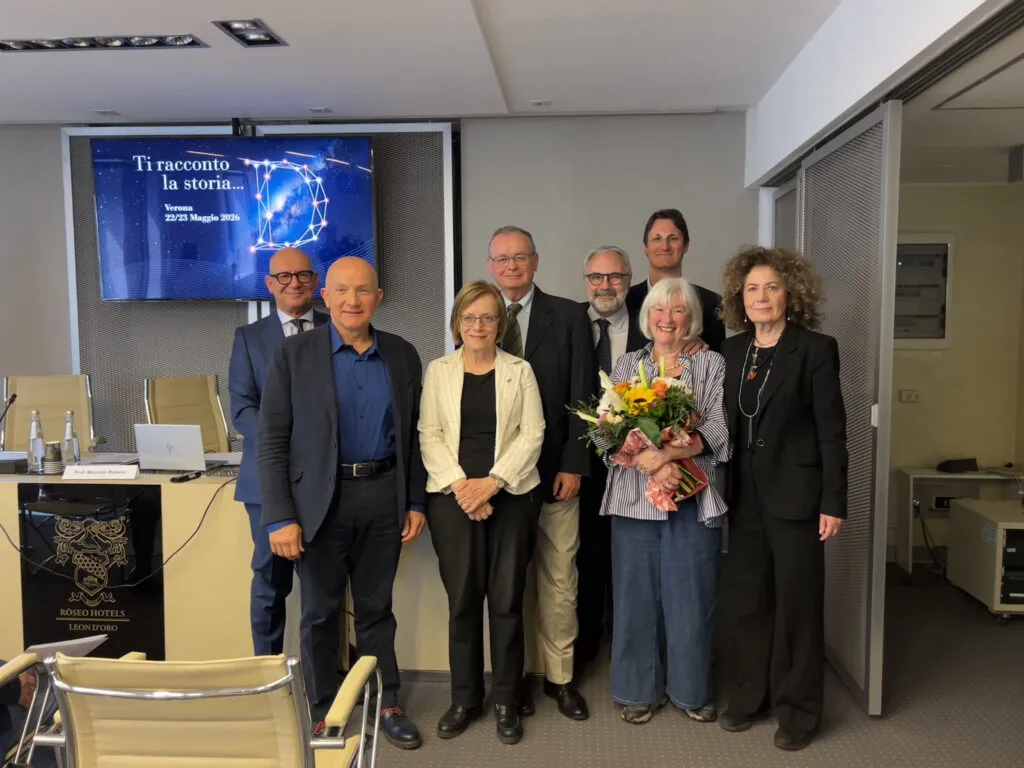
Researchers and clinicians from major Italian academic and hospital centres — including Milan, Rome, Bologna, Padua, Pisa, Parma, Genoa and Verona — contributed to a programme that examined both established evidence and unresolved controversies surrounding cholecalciferol supplementation.
One of the key messages emerging from the meeting echoed the most recent international recommendations: vitamin D should no longer be prescribed indiscriminately, but rather tailored according to individual clinical conditions, risk profiles and laboratory evidence. This concept, already gaining traction in scientific literature and reflected in recent rheumatology guidelines, was repeatedly reinforced during the discussions.
The programme brought together experts from major Italian academic and hospital centres including Milan, Rome, Bologna, Padua, Parma, Pisa and Genoa, reinforcing the international profile of the conference and its multidisciplinary character.
Opening the congress, Professor Maurizio Rossini — Director of the Rheumatology Unit at AOUI Verona, Director of the Rheumatology Specialisation School at the University of Verona and Coordinator of the Osteoporosis and Metabolic Bone Diseases Study Group of the Italian Society of Rheumatology — retraced the origins and scientific legacy of the “Verona School”, which played a decisive role in clarifying the relationship between vitamin D deficiency, osteoporosis and musculoskeletal disorders.
Professor Davide Gatti, from the Rheumatology Unit of AOUI Verona and President-elect of the Italian Society of Osteoporosis, Mineral Metabolism and Skeletal Diseases (SIOMMMS), guided several of the congress discussions dedicated to supplementation strategies and the evolving role of cholecalciferol in modern clinical practice.
Among the most internationally recognised speakers was Professor Francesco Bertoldo, Head of the Mineral Metabolism and Osteoncology Centre at AOUI Verona and President of the Italian Bone Interdisciplinary Specialists Group (GIBIS), who focused on the relationship between vitamin D deficiency and skeletal fragility.
Particular attention was also dedicated to the practical management of osteoporosis and vitamin D deficiency within everyday clinical care. Professor Vania Braga, Head of the Osteoporosis Diagnosis and Treatment Clinic at the Regional Osteoporosis Reference Centre of ULSS 9 Scaligera, member of the SIOMMMS board and Vice President of ANEOP, highlighted the importance of translating scientific evidence into clearer and more sustainable clinical pathways for physicians and patients alike. Her contribution focused on the growing need for accurate communication, appropriate prescribing strategies and more accessible interpretation of laboratory data in patients with different risk profiles.
The discussions explored a wide range of topics, from fracture prevention and muscle function to cardiovascular risk, chronic kidney disease, obesity, diabetes and fertility. The final round table addressed one of the major unresolved questions in contemporary medicine: whether vitamin D supplementation should remain empirical or increasingly guided by personalised diagnostic assessment. The debate reflected a broader transformation in international healthcare towards precision medicine and more sustainable prescribing strategies.
The success of the Verona congress demonstrated how the city continues to play a pivotal role in shaping scientific reflection on vitamin D metabolism and clinical application. More than a celebratory event, the meeting became a platform for critical dialogue, interdisciplinary collaboration and renewed scientific awareness in a field that continues to evolve rapidly.