(Angelo Paratico) In Spanish it is called corbata, in German kravate, in French cravate, in Italian cravatta, and in Japanese nekutai. Bandana is Sanskrit, focale or sudarium is Latin. Necktie is American, but if you mention a cravat to a Briton, he may think of something like a scarf if he is well acquainted with the past, or an ‘Ascot’ if he is not. The modern tie was created around 1850 in England, in Macclesfield, Surrey. That place had the largest number of weaving, dyeing, and printing mills for silk in the world by 1821.
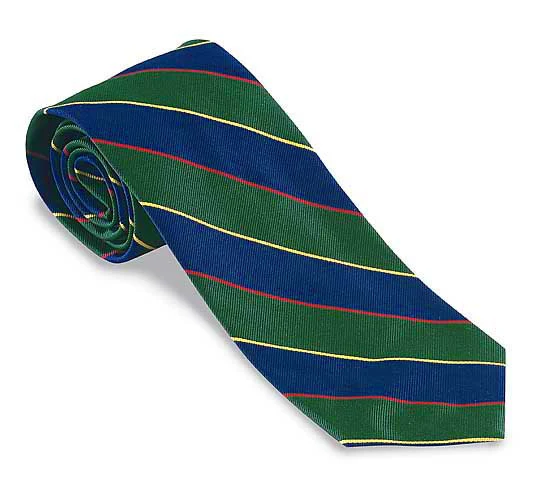
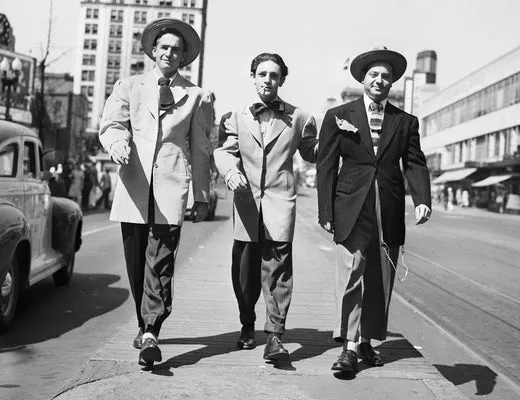
With a tie, a man looks better, slimmer, and taller, due to the verticality of the line. Uniform is everything, and yes, most women love them. If you dress like a general, people will think you are a general until the contrary is demonstrated. To pull a man by the tie was a capital offence; it was called peanuting.
Women often make the mistake of giving men a tie they like, not what men like. When a woman gives a tie to a man, the mistake may be more serious than she can imagine – a form of disrespect for the man.
The bow tie is still out of fashion, but it received a great deal of negative press in the 1970s and 1980s. In the book “Dress for Success,” a sort of bible in the seventies for men, we read: “You will not be taken seriously if you wear a bow tie. Most people will not trust you with anything important. In general, I have found that people believe that a man wearing a bow tie will steal.”
The history of the tie goes back to the Stone Age. The tie, or something like it, could have been around for many thousands of years as the mark of a chieftain.
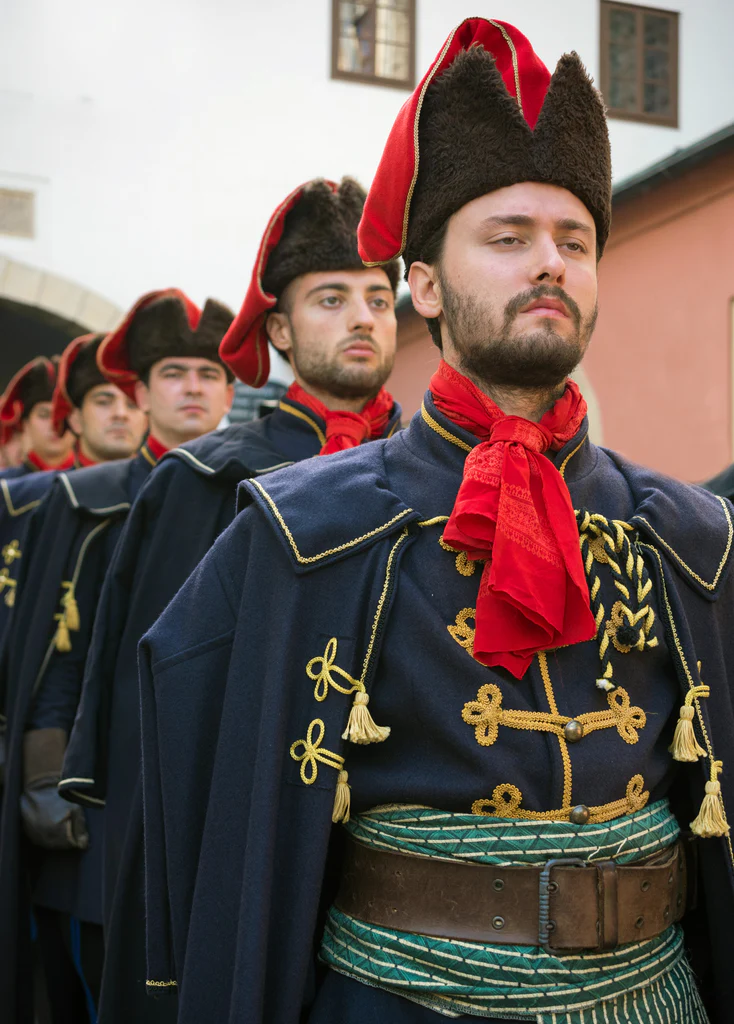
During the Thirty Years’ War (1618–1648), Croatian mercenaries in the French Army sported a sort of cravat. But the link between Croats and the cravat (or the tie) is not real. It is simply not true, even if Necktie Day is celebrated in Croatia on 18 October, but they did not invent it.
Eustache Deschamps, a contemporary of Petrarch in the 14th century, wrote in a ballad ‘Faite restraindre sa cravate’ – that is, tighten his cravat.
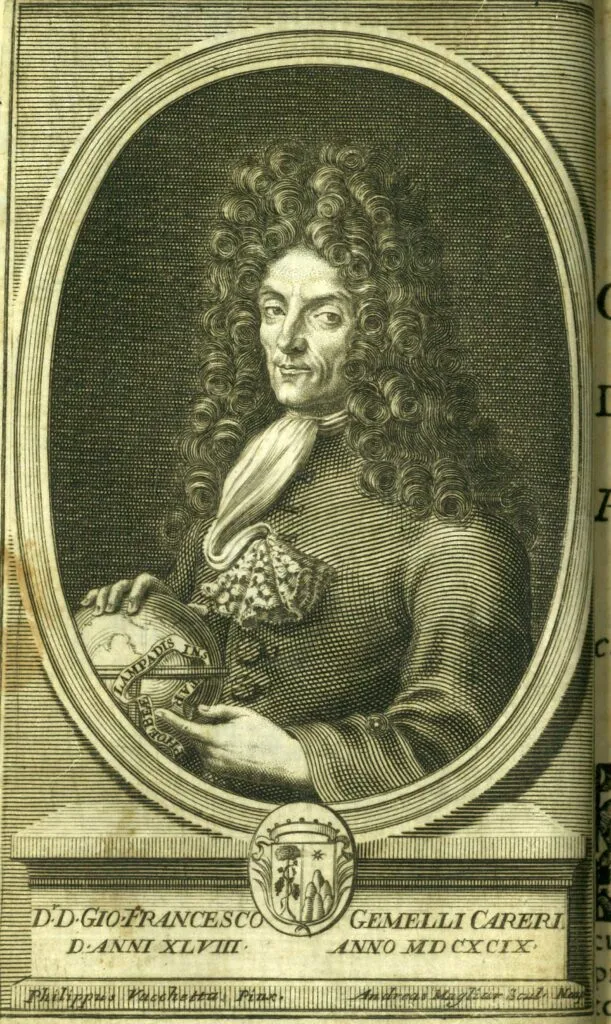
Venetian Cesare Vecellio used the word ‘cravatta’ in 1590 in his book about the clothing used in different parts of the world.
During the Battle of Steinkirk, fought in 1692, legend has it that, while in Holland, some British soldiers launched a surprise attack on the French army. To hurry to battle, the French had no time to tie their cravats properly, so they twisted them and passed the ends through their buttonhole lapels. This became very popular and remained so for over 100 years. Look at the picture of Gemelli Careri.
Some say that Europe experienced a small glacial period from 1645 until 1715, due to solar activity, and this, according to some, explains the explosion in the use of cravats and bandannas during that period.
Venetian lace, gros Point de Venise, was indeed very popular in the 17th century and reached mania status all over the world as a sort of neck tie. Huge sums were spent on it. Louis XIV was a great fan of Venetian lace.
The stock appeared in 1715 in Germany. It looks like an instrument of torture with a sort of rigid collar for military use, tightened at the back. The solitaire was a bow made in front when wearing a toupee on the head and a stock.
Bandannas were smuggled into Europe from India, perhaps because they were prohibited under the Calico Act from 1700 to 1720, and this may have aroused the curiosity that caused a lot of smuggling through France.
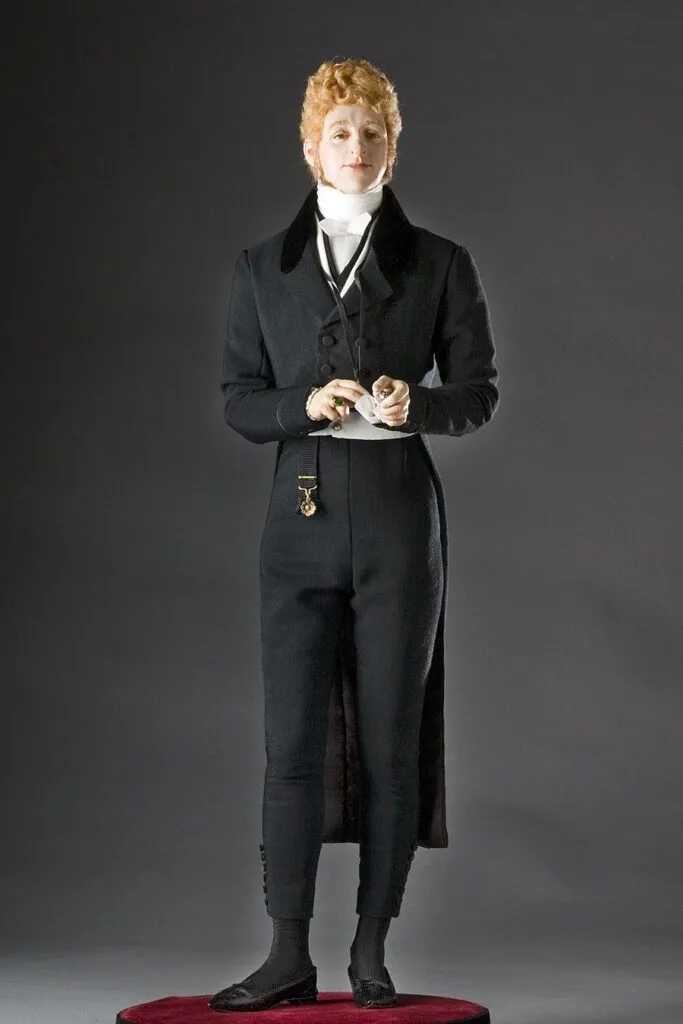
GEORGE BRUMMELL (1778–1840), Beau Brummell
His best years were 1800–1830. After Oxford, he joined the Hussars and became a friend of the ‘Prinny Prince’ George IV (who loved black stocks). He became a kind of new Petronius Arbiter of fashion in England. He said of himself: I was a nobody who became somebody and gave the law to dress to everybody.
He was a gentleman because he looked like one and was better than all the others. He re-invented fashion for men: Blue jacket, buff color trousers and vests, black boots. Bright white cravat. No vulgar show, no eccentricity, just being in order.
KNOTS
Tailors make your suit but you must tie your cravat. One of the only items where men can express their vanity. Knowing three basic knots is enough for a gentleman: the Oriental, the half-Windsor, and the Windsor.
Pratt Knot (also known as Shelby) is the latest invented in 1989. Basically, it is a half-Windsor reversed. Mr. Le Blanc said that to knot a bandana is an art but knot a tie is science. Theoretically speaking, the maximum possible number of knots is 85.