Elisabetta Ulivi, a professor at the University of Florence, Department of Mathematics, has spent several years researching the background of Leonardo da Vinci. In the process, she has made several startling discoveries, subsequently publishing books and articles. (1)
It is indeed strange that no editor has ever translated them into English for publication outside Italy, as they are extremely important for Leonardo’s biographers. She has prepared an article entitled: “Su Caterina, madre di Leonardo: vecchie e nuove ipotesi”, which in English translates as: “On Caterina, mother of Leonardo: old and new hypotheses.”
Leonardo da Vinci was presumably born in Vinci on 15 April 1451. While we know a good deal about his father, Ser Piero da Vinci, a successful notary working in Florence, we know very little about his mother. We do know that she was named Caterina, that she died in his arms in Milan at the age of 60, on 26 June 1494, and, unfortunately, very little else. Edmondo Solmi (1875–1912), reflecting on her memory in one of his books on Leonardo, wrote: “It seems that nature, after having produced the miracle, wanted to cover with an impenetrable veil the place and the human being which was an instrument for that wonderful effect.”
Indeed, the veil has not yet been lifted. On this matter, there are two distinct views among researchers. Some believe that Caterina did not belong to the village of Vinci but was a slave – slavery having been fairly common in Tuscany as a side effect of the depopulation caused by the Black Death (1347–1353), while others think that Caterina was simply a village girl from Vinci.
Quite recently, Martin Kemp and Giuseppe Pallanti jointly published a book entitled Mona Lisa: The People and the Painting (Oxford University Press, 2017). Martin Kemp announced that, thanks to archival research carried out by Giuseppe Pallanti, a professor in Florence, the mystery had finally been solved: Caterina was a native girl of Vinci, born around 1436 to Meo di Lippo. This statement was reported in the media worldwide. After reading their book, we found their arguments rather weak.

Our view is confirmed by Elisabetta Ulivi, who had considered this possibility years earlier and rejected it. Having painstakingly researched all the Caterinas found in the archives of Vinci – a fairly common name, considering the low number of inhabitants in Vinci, about a dozen of them– Even if Elisabetta Ulivi does not exclude the possibility that Leonardo’s mother, later the bride of Accattabriga Buti of Vinci, was a domestic slave first employed in Florence by Ser Vanni, a wealthy client of Ser Piero da Vinci, she nevertheless presents a new theory about one of the native girls of Vinci: Caterina di Antonio di Cambio, overlooked by Kemp and Pallanti. This girl has connections with Leonardo da Vinci and is the best candidate to be the right Caterina.
She was the daughter of Antonio di Cambio and, curiously, had a sister-in-law called Mona Lisa.
This girl was 13 in 1451, but her age is probably incorrectly indicated in the documents from that time and, she may have been 16 years old. There is considerable factual evidence of the closeness between the Buti and di Cambio families, who were also neighbours in San Pantaleo, a borough of Vinci. After Leonardo da Vinci, Caterina had a daughter called Piera, like the mother of Ser Piero da Vinci, and then another daughter named Maria, like the mother of Antonio di Cambio. The di Cambio family was respectable in Vinci, which may explain why the Anonimo Gaddiano mentioned her as “di buon sangue” – of good blood.
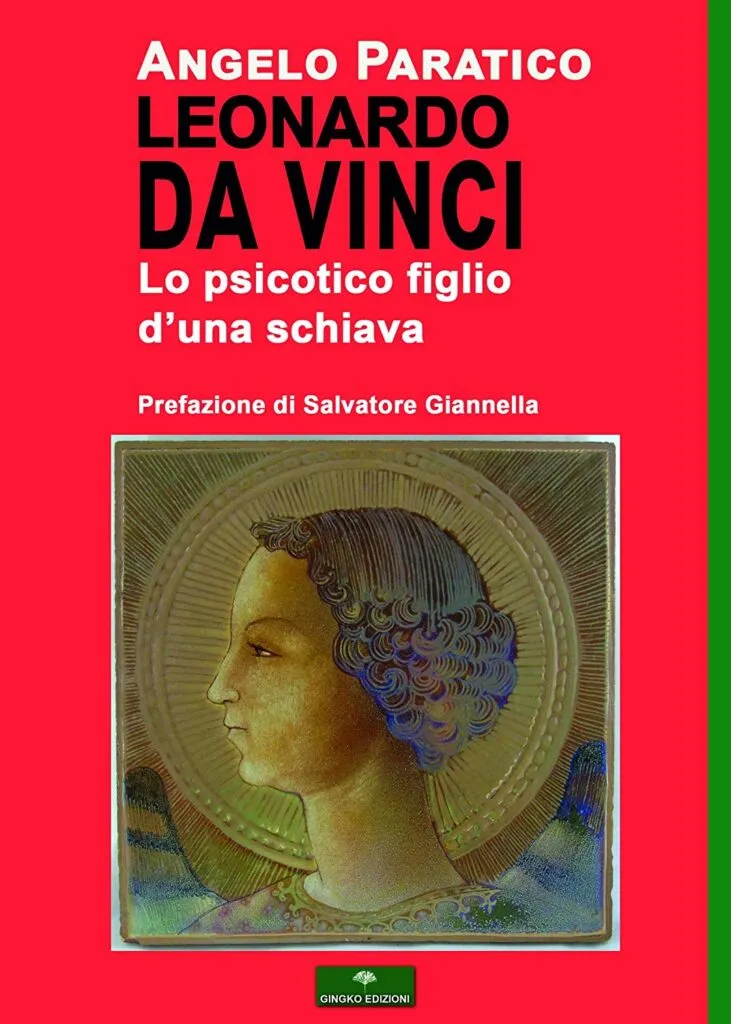
The new findings made by Professor Ulivi may be considered the most brilliant and well-documented to connect Caterina, the mother of Leonardo, with the village of Vinci.
(1) Le residenze del padre di Leonardo da Vinci a Firenze nei Quartieri di Santa Croce e di Santa Maria Novella, in “Bollettino di Storia delle Scienze Matematiche”, XXVII, 1, 2007, pp. 155–171.
For the genealogy of Leonardo. Matrimoni e altre vicende nella famiglia Da Vinci sullo sfondo della Firenze rinascimentale, edited by Agnese Sabato and Alessandro Vezzosi, Museo Ideale Leonardo Da Vinci, Vinci, 2008.