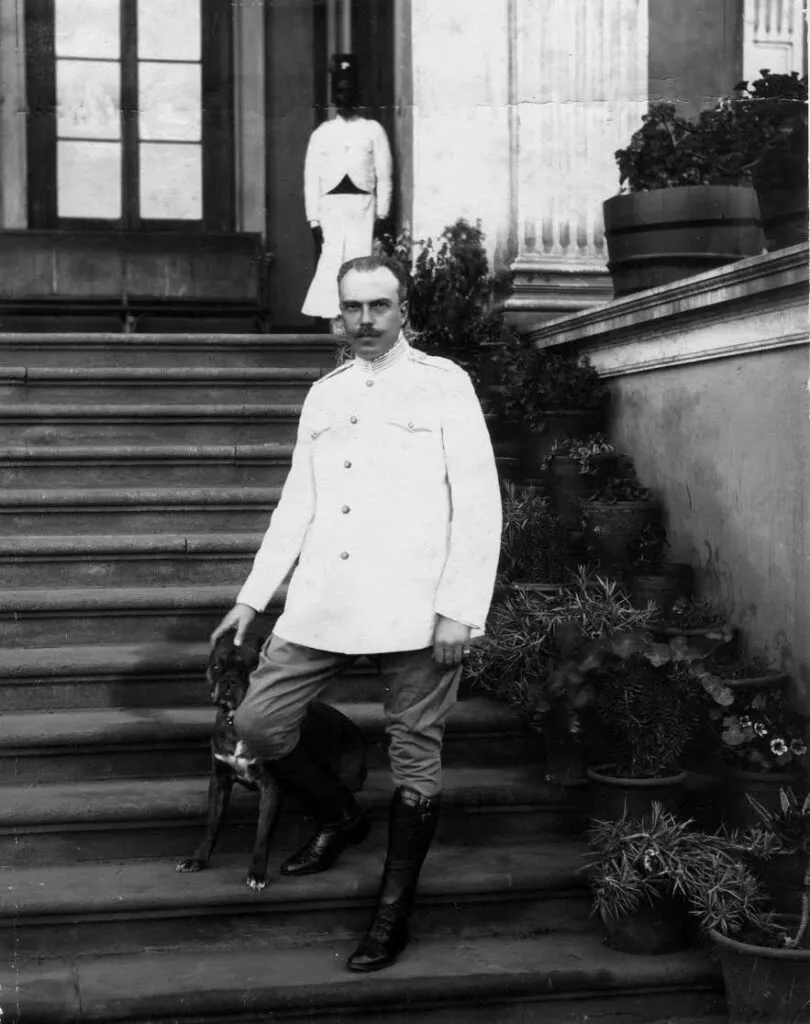
The most recent edition of Giuseppe Salvago Raggi’s (1866–1946) memoirs was published in 2011: *Ambasciatore del Re. Memorie di un diplomatico dell’Italia liberale* (The King’s Ambassador: Memoirs of a Diplomat of Liberal Italy) by Le Lettere, as part of a series edited by Francesco Perfetti. The first edition of this remarkable work, however, dates back to 1976, as an appendix to Glauco Licata’s volume “Notabili della Terza Italia,” published by Cinque Lune, Rome.
The name of Marquis Giuseppe Salvago Raggi is legendary in Italian diplomatic circles, even though the course of his life had little to do with the Umbertine “Little Italy” or the Italy that emerged from the ruins of the First World War. Fortunately, his writing style was never tainted by D’Annunzio’s rhetoric, which ruined an entire generation of writers; instead, it is closer to the Anglo-Saxon style. He writes without affectation, plainly, and always employs great irony when compelled to mention himself. Here is the opening of his memoirs: “To recount sixty-six years of banality is to bore the unfortunate soul who might undertake to read it. Why, then, do I write? Because old people like to tell stories, since they have nothing else to do; I write because whoever holds this manuscript might find a detail capable of correcting an erroneous version, and finally because these pages, should they one day fall into the hands of an idler, might amuse him, telling him what people in 1933 thought of events that took place in that era, which will then be long past.”
He belonged to a very ancient Genoese family. He was always opposed to Freemasonry, which in Umbertine Italy wielded disproportionate power, determining appointments and assignments, often favouring the incompetent and the corrupt. His memoirs, written in 1933, were not drafted with publication in mind: his was a sort of duty, having never kept a diary as his colleagues in the diplomatic world did.
Like a poet writing on the sand at low tide, he continued to write until the end of his days, often without ever publishing a single line. His articles remained mostly locked away in the family archive, waiting to be rediscovered and brought to light. We hope this will happen soon, because apart from these memoirs and a small volume titled “Letters from the East,” we have nothing else. He wrote those delightful letters when he was in his early twenties and was sent by his father on that journey to help him recover from a bout of depression.
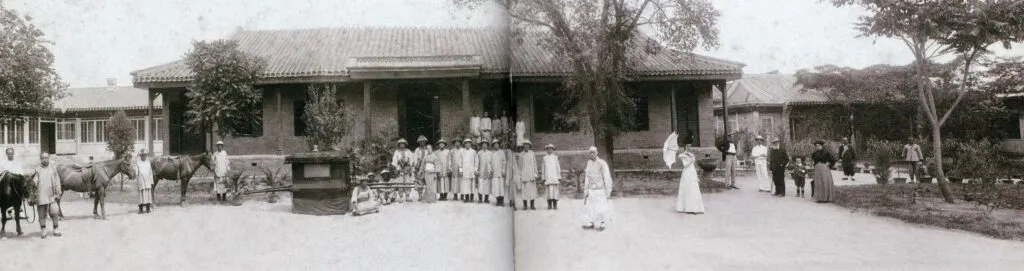
There are three particularly interesting phases in his memoirs. They concern his appointment to Cairo in 1894 as Italy’s deputy ambassador; his time in Beijing in 1900, where he and his family were confined for 55 days within the legations besieged by the Boxers; and, finally, his work as Italy’s representative in Paris in 1919 for the Peace Conference. The section on Cairo is especially interesting because it reveals all the maneuvering and recklessness that led to the disaster at Aduwa, which could have been avoided with a little more caution and a little less arrogance.
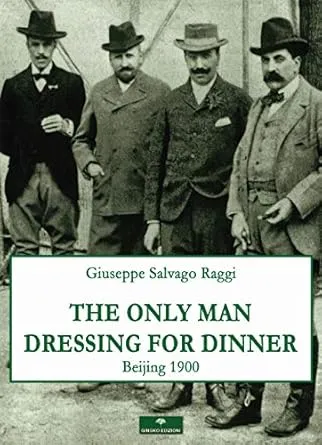
As for his time in Beijing, reading his memoirs confirmed what we had always suspected: namely, that he behaved well, contrary to what is written in the English-language accounts, which portray him as a dandy incapable of participating in the desperate defence of the Legations on the barricades. The truth is exactly the opposite, and we have translated and published the chapters concerning his participation in English, through Gingko Edizioni in Verona, to correct once and for all the distorted interpretation of the sources – all of which are biased, French and British – used to study those events.
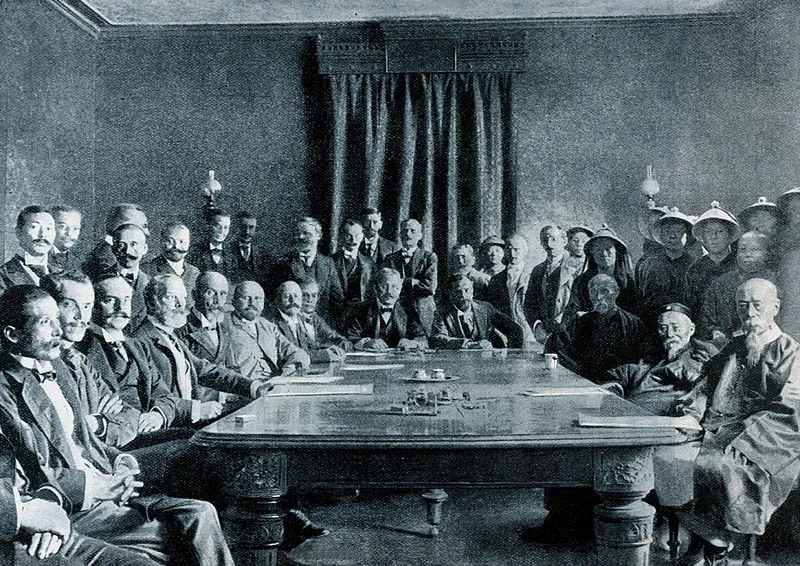
In 1915, Salvago Raggi was strongly opposed to Italy’s entry into the war, but once war was declared, he abandoned his diplomatic career and enlisted as an artillery officer, going to fight on the front lines. He was then sent to negotiate the Treaty of Versailles, and here too he shows us, without mincing words, the incompetence and pettiness of the negotiators.
He was one of the few diplomats who dared to resign upon witnessing the relentless hostility of the French and British towards the defeated Germany, correctly sensing that it would not end there, and that the Germans would find a way to take revenge. For this reason, he resigned, being labelled a fool and a coward by the other negotiators, Sidney Sonnino and Antonio Salandra.
In 1922, half an hour after the young Benito Mussolini was appointed prime minister by the king, he asked Giuseppe Salvago Raggi, who was nearing retirement and had refused new assignments, to explain the complex issue of war reparations to him, as a session was soon to be held in Berlin. Mussolini told him, “This morning I can give you an hour of my time, and two hours this afternoon. I could also see you tomorrow if you feel it is not necessary to leave tonight.” Salvago Raggi replied, “Are you familiar with the provisions of the Treaty of Versailles regarding reparations?” Mussolini said no and added that he was not even aware of what had been discussed at the Spa Conference. Salvago Raggi then began from the beginning, and after half an hour, Mussolini interrupted him to summarize the points, which astonished the old diplomat. He had understood! Salvago Raggi then continued his presentation, making some rather bold political observations, to which Mussolini, however, always agreed, and then asked him:
“What do you think of what is happening?” Salvago Raggi replied with equal frankness that he had done well so far, but the hard part was yet to come, and he compared him to the sorcerer’s apprentice who makes water gush from a well but does not know the magic formula to make it stop. Having gained his trust, Mussolini then asked him if he had read the telegram of refusal sent to him by Carlo Sforza. Salvago Raggi had had a clash with Sforza when he began his career as his subordinate; he considered him a good-for-nothing and full of himself. Mussolini showed him the draft of the reply he intended to send and asked if he approved of it. Salvago Raggi approved it, but he left the meeting convinced that he was dealing with a man of quick wit but, at the same time, one with whom “the last to speak is always right.”