(A.P.) Recent controversies raised by the British press about the authenticity of Juliet’s Balcony have not diminished its enduring appeal. We must not forget that there is another place in Verona linked to Juliet: her tomb. This remains strongly linked to British tourism.
Shakespeare’s Verona is a real curiosity for British literary tourists. It seems extremely unlikely that the theatre impresario and actor William Shakespeare ever visited Italy, but the Earl of Oxford, who was perhaps the real author of the tragedies, and John Florio, who was certainly the editor of those works, did visit Verona.
Shakespeare’s choice to set some of his plays in Italy, including Romeo and Juliet (c. 1594-6), was directly inspired by Arthur Brooke’s repeatedly reprinted poem The Tragicall Historye of Romeus and Juliet (1562), a translation of the French version of a well-known story that originated in the Italian versions written by Luigi da Porto and Matteo Bandello.
The invention of Shakespearean Verona as a tourist destination took place at the turn of the 18th and 19th centuries and was inspired by the desire to search for traces of the supposed Juliet. Surprisingly, the story of how the city of Verona became associated with the existence of a real historical Juliet has a lot to do with the fall of Napoleon.
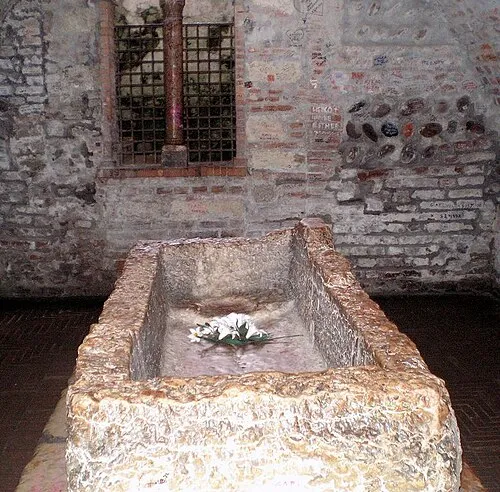
Many young people today get married at “Juliet’s tomb”. And it was at “Juliet’s tomb” that Shakespeare’s real Verona began, as the balcony did not yet exist. It is located on the grounds of a convent with a garden in front of it. You go down some stairs and enter a crypt where you can see a Roman sarcophagus clearly lying on a tiled floor.
Juliet’s tomb first appeared shortly after the Battle of Waterloo. For most of the 18th century, Juliet was believed to have been a real person, probably buried in Verona, but it was also thought that her tomb had been lost.
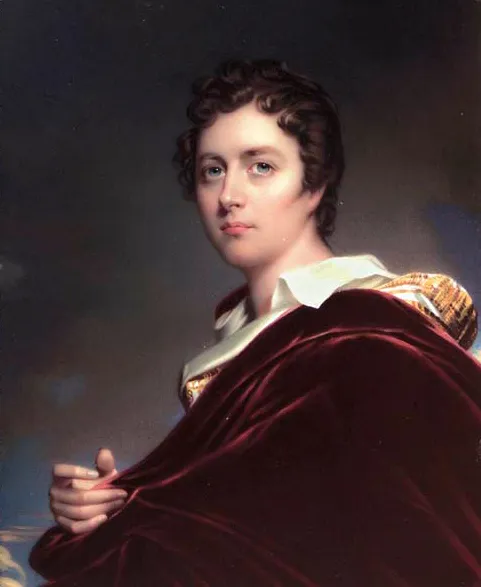
Then, surprisingly, a letter from 1816 written by Lord Byron appeared in which he recounts visiting her tomb during a stop in Verona on his way to Venice. Enthusiasm for Lord Byron soon became widespread in England, where his books sold like hotcakes, and this was probably the driving force behind the creation of this tomb.
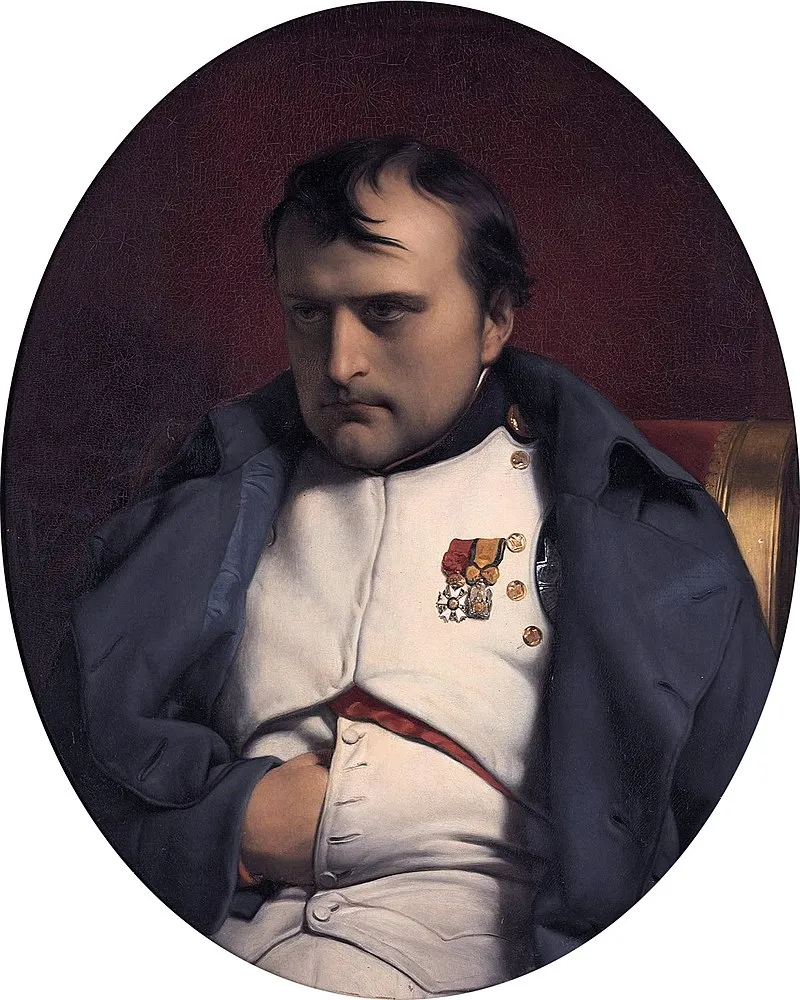
British travel to continental Europe had been restricted by the blockade imposed by Napoleon, who lost at Waterloo in 1815.
The first clue comes from the poet Samuel Rogers, who, along with other aristocratic tourists, had rushed to the continent during the brief peace of 1814 and travelled through Switzerland to northern Italy. Rogers wrote that he had visited the garden of a convent, where he had seen “Juliet’s stone coffin, the niche for her lamp, the spiraculum for her breathing”. The “spiraculum” was a hole that was made in Roman times to allow liquids to escape during the decomposition of the corpse.
Rogers noted that the coffin was already showing signs of damage and attributed this to the passion for relics, which had prompted visitors to steal some fragments. Jane Waldie confirms this account in her Sketches descriptive of Italy (1820), commenting rather naively on the gossip of a guide in 1817: “Every English visitor takes away a piece of marble; a circumstance which he greatly deplores, without considering that telling everyone about it is precisely the way to perpetuate the custom”. Interest in these relics also spread to other nationalities.
François-René Chateaubriand, attending the Congress of Verona, observed in 1822 a pair of bracelets worn by Marie Louise, Archduchess of Parma and widow of Napoleon, which had been made from the reddish stone of the coffin. Antoine Claude Pasquin Valéry mentions in his Historical, Literary and Artistic Travels in Italy (1839) that:
“Some distinguished foreigners and beautiful ladies of Verona wear a small coffin made of this same stone”, and in 1829 Maria Callcott, on her honeymoon in Italy, noted that she had met a gentleman who wore a fragment of the tomb set in a ring.
Some tourists went beyond simply seeking souvenirs in their thirst for sentimental authenticity.
In the autumn of 1816, two years after Rogers’ visit, the French traveller Jacques Augustin Galiffe heard the story of an English lady, whose name he does not reveal, who had paid homage to this shrine a few weeks earlier and had decided to lie down full length on this tomb, like a monumental figure, with her hands devoutly crossed on her chest.
But he added that “it is dangerous to tempt the devil, especially in a monastery. As soon as the romantic visitor had crossed her hands on her chest, a sudden gust of wind had ruffled her defenseless clothes, causing no little confusion to herself and a certain scandal to the half-dozen friends who accompanied her”.
The devil showed his underwear.
Enthusiasm for Juliet’s tomb was slightly dampened by the publication of John Murray’s Handbook for Travellers in Northern Italy (1843), which raised serious doubts about the authenticity of the monument. But even though the tomb had been officially declared a fake, Victorian tourists were not discouraged from visiting it. In 1864, Henry Gaze’s guide North Italy and Venetia summed up the situation as follows: ‘Juliet’s tomb, doubtful, but worth seeing’.
Although the Victorians rejected the tomb as inauthentic, they could still use the site to evoke a localized encounter with Juliet. Mary Wollstonecraft Shelley, creator of Frankenstein, for example, in September 1842, while admitting that the tomb itself was probably fake, used her visit as an opportunity to evoke Juliet as a historical figure and to connect emotionally with her.
‘Nevertheless, such a scene—a garden, with its high ancient walls, its Italian vegetation, and the blue, cloudless sky above—was a familiar scene to Juliet; and her spirit might hover here, even though her beautiful body was buried elsewhere,’ she wrote in her Rambles in Germany and Italy in 1840, 1842, and 1843 (1844). As Shelley’s visit reveals, the tomb and the garden in which it stood provided even the most skeptical with a sense of physical continuity between past and present, reading and reality, through contact with Juliet herself, not least because the sarcophagus was ancient and had been touched by the sacred hands of Lord Byron.
Visiting the tomb, stealing fragments to set in jewelry, lying down in the sarcophagus, throwing visiting cards into its cavity: all these practices effectively expressed the desire for a physical encounter or even identification with Juliet’s body. This impulse is still evident today, with thousands of selfies of women posing in front of the tomb.