By Giorgio Massignan
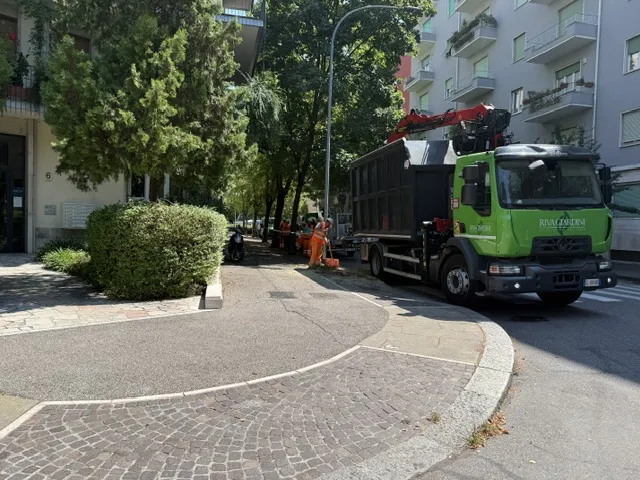
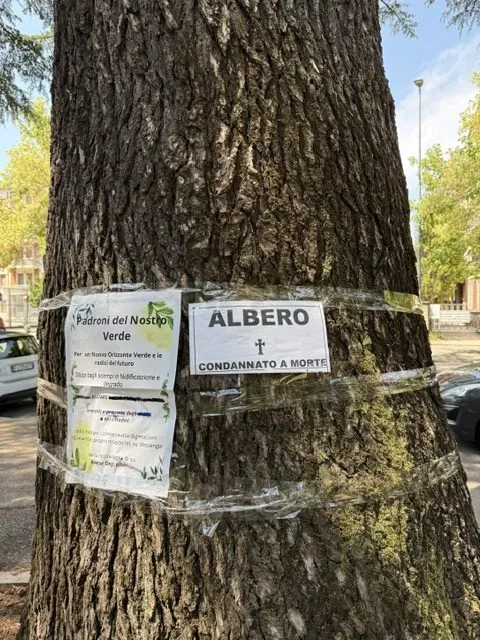
2026 will be remembered as the year in which thousands of trees were felled across Italy. Some 30,000 in Rome alone. In Bologna, chainsaws were at work on a Sunday from four in the morning. In Florence, an entire urban woodland was razed to the ground. In Verona, trees were cut down along avenues, in squares and in some of the city’s last remaining green spaces.
Why have so many cities started cutting down thousands of trees?
Why this wholesale destruction?
To begin with, the EU’s Recovery and Resilience Plan funds came to an end on June 30, prompting a frantic rush to complete projects financed under the programme. Among the works carried out in haste, the felling of trees has featured prominently.
There is another factor: two rulings by Italy’s Supreme Court, the Corte di Cassazione, have established the responsibility of municipalities for damage caused by storms and flooding, potentially making public authorities liable to compensate private individuals for resulting losses.
A third factor concerns EU rules introduced after Covid and the ensuing economic crisis, which left many municipalities with depleted coffers. The authorities have sought to ensure that future expenditure is properly accounted for, including the costs that will have to be allocated to maintenance.
The PNRR has channelled billions of euros into urban regeneration and environmental projects. But these funds cannot generally be used for interventions requiring continuous, long-term maintenance; they are intended for construction, renovation and other essentially one-off projects.
That is why EU funding cannot be used to pay for the ongoing maintenance of trees, roads and pavements.
And trees are expensive to manage properly. They require recurrent expenditure: targeted pruning, phytosanitary inspections, root monitoring and structural-stability assessments. Removing the trees eliminates those continuing costs.
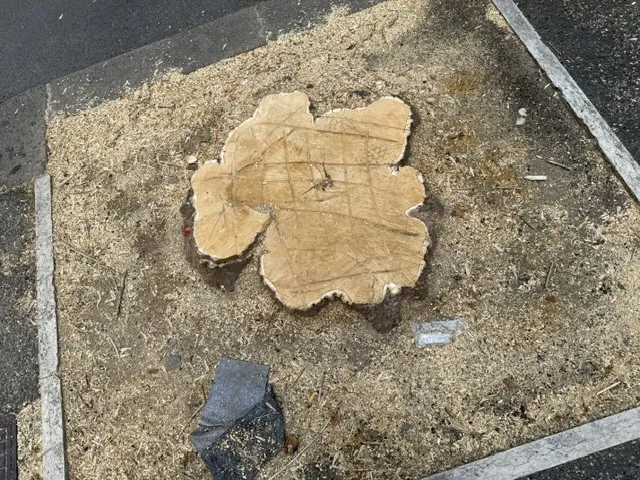
THE MULTI-UTILITIES OF THE GREEN INDUSTRY AND CONSULTANCY FIRMS
There is, however, another important aspect to consider. Much of the money earmarked for the environment has been spent by municipalities through large private companies specialising in urban greenery – vast contractors winning tenders worth millions of euros.
In many cases, local authorities ask these companies not merely to prepare a quotation but also to draft the tender specifications themselves, because municipalities increasingly lack the in-house technical staff required to do so.
Those companies, in turn, frequently engage large consultancy firms.
Both the major green-services contractors and the consultancies are private businesses.
WHY IT IS MORE PROFITABLE TO CUT DOWN TREES THAN TO LOOK AFTER THEM
For these large contractors, felling an avenue of trees can be considerably more profitable than maintaining it.
Heavy machinery can clear a substantial stretch in just a few hours, maximising the contractor’s margin on a project or allowing it to remain within an emergency budget made available by the public authority.
Proper routine maintenance is a different proposition. It requires workers to tend individual planting beds, aerate the soil and carry out carefully targeted pruning. Such work is labour-intensive, requires specialist staff and consumes many hours. For a large contractor, the margins can therefore be negligible – or even negative.
THE REPORTS
Consultancy firms are also commissioned to prepare technical assessments. On the basis of these reports, they may recommend radical intervention, including the felling of trees, in the name of ensuring absolute safety for citizens.
Municipal officials are warned that, should an accident occur, the Supreme Court rulings could expose senior officials to personal and even criminal liability if a falling branch or tree causes injury or damage to property.
For consultancies and large green-services contractors alike, felling trees is therefore more economically attractive than maintaining them – particularly when routine maintenance cannot be financed through PNRR funds.
The result is that a substantial proportion of public money is directed towards removing trees rather than carrying out the routine maintenance that municipalities should be undertaking every year.
There is an additional complication: municipalities are sometimes shareholders in the very multi-utility companies to which they award contracts.
If a municipality receives EU funding and then passes part of that money on to a company in which it has a stake, the greater the savings achieved by choosing tree removal over long-term maintenance, the greater the company’s profits. Some of those profits may ultimately return to municipal coffers, where they can be spent without the restrictions attached to EU funding, while another share goes to the company’s private shareholders.
The consequences, however, are borne by everyone else.
Italy’s urban landscapes are stripped of trees, its remaining green spaces diminished, and its citizens deprived of the environmental and health benefits that mature urban vegetation provides.
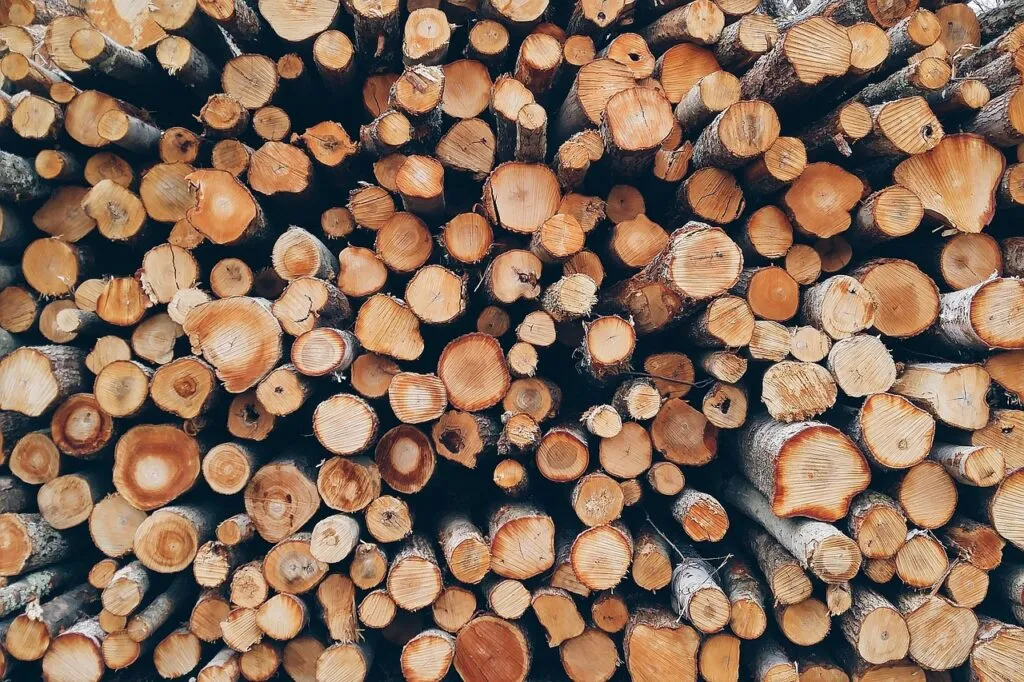
AND THEN THE WOOD IS SOLD
Finally, there is another point that should not be overlooked: the timber produced by felling all these trees ends up in biomass power plants, which operate around the clock and have a constant demand for wood.
The paradox is striking. Trees are being cut down in order to secure European funding for environmental resilience projects, while additional revenue is then generated by selling the resulting timber to biomass plants – themselves subsidised by the Italian state.
In other words, trees that are ostensibly being removed in the name of urban regeneration and environmental resilience can acquire a second economic value once they have been felled: first as part of a publicly funded project, and then as fuel for an energy sector supported by public money.