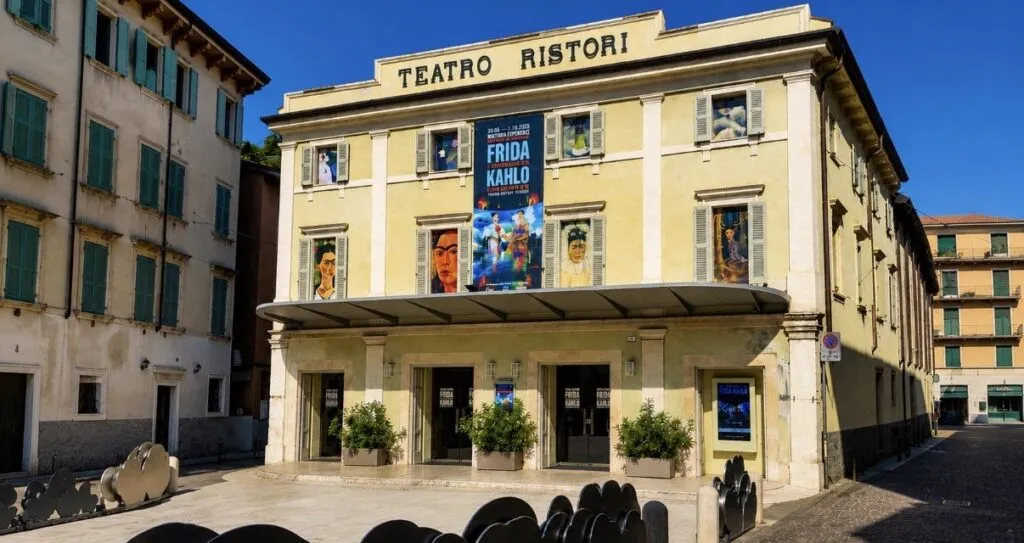
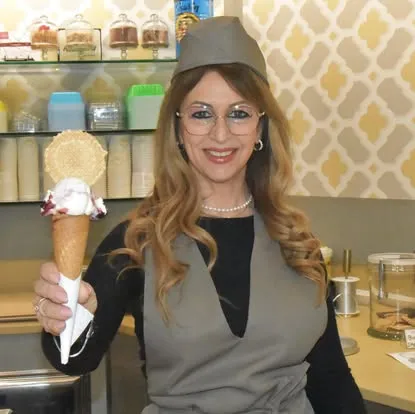
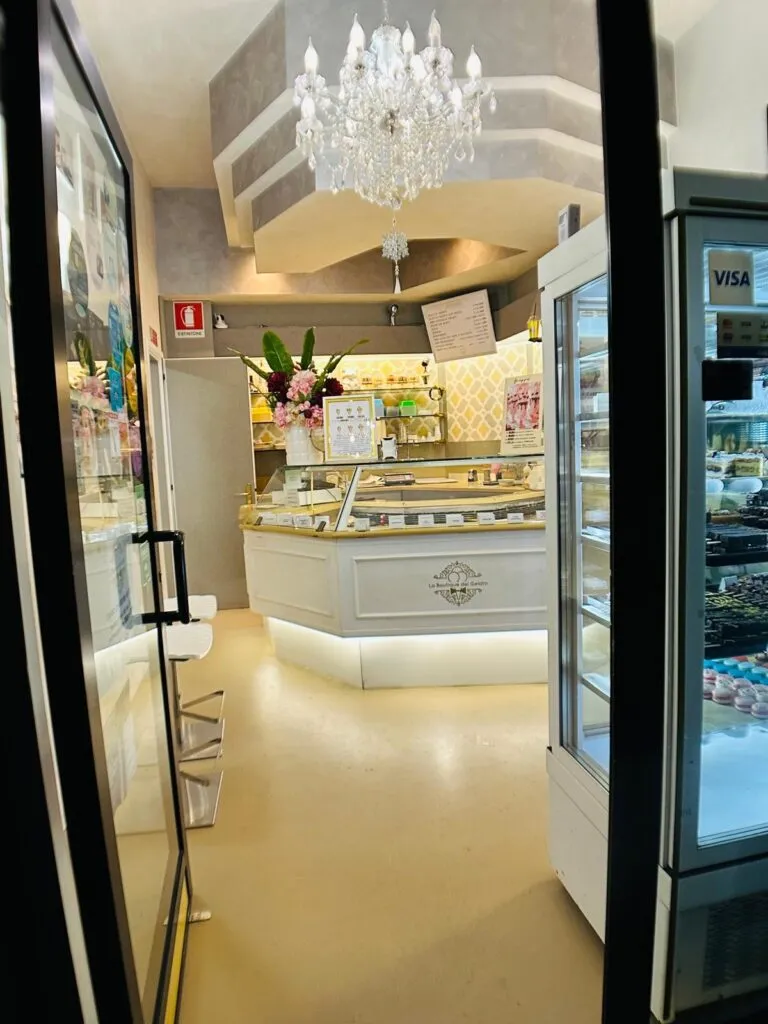
I know Angela and Roberto Di Pietro well. The brother and sister are artisan gelato makers in Verona and the long-standing owners of Boutique del Gelato, the shop they opened in Borgo Trento 37 years ago. Today, their gelateria is at 13 Via Carlo Ederle, just a short distance from Piazza Vittorio Veneto, at the heart of one of Verona’s favourite promenades.
Step inside and you will immediately notice that their gelato looks unlike anything else. Its surface is smooth yet subtly porous, with a natural, inviting colour.
Choose a flavour according to the taste and quality you are looking for, and the result may be a sorbet, gelato or semifreddo. What is particularly striking is how closely the two siblings agree on their approach to production: a rigorous selection of raw ingredients, traditional artisanal methods without chemical additives, and a constant search for new flavour combinations.
They also work with a remarkably short list of basic ingredients: high-quality fresh milk, cream and very little sugar. The result is a careful balance between timeless classics and more adventurous experiments.
Donatella Dal Maso, writing for L’Adige in Verona, interviewed Angela Di Pietro, an Italian master gelato maker.
I have noticed that your gelato is different from what you find in other shops — unusual, yet harmonious. Why is that?
“First of all, there is something very important to consider. The globalised market has, to some extent, become standardised around an American-style model of gelato, with a base of hydrogenated fat, excessive amounts of sugar and flavourings.
The gelato sold by the chains that are now so widespread is essentially the same wherever you go in the world. And, as a result, it cannot really be natural.
All our recipes are personal family recipes. We first developed them with my father, with whom I worked for 14 years, and then Roberto and I continued the tradition in our own shop. We don’t have products with a standardised flavour. A cassata, for example, cannot possibly contain the same amount of sugar as a date.
We redesign every flavour ourselves because, for example, fruit is never exactly the same and does not always taste the same. That is nature. Everything depends on the season and the degree of ripeness.
You have to taste the ingredient and formulate the recipe according to the product you have in front of you at that particular moment. That is precisely where the craftsmanship of our gelato lies.”
Can you tell me about some of your more unusual flavours?
“In autumn, fresh dates from Israel would be wonderful. Sadly, because of the serious conflict in Gaza and Lebanon, this product has become politically sensitive and we have chosen not to use it.
Chestnuts are now coming into season, as is zuppa inglese, followed by a great classic: the famous babà. Here we make a pastry cream and combine it with half fresh cream, with layers of babà soaked in a light rum syrup.
I buy the babà directly from a pastry shop in Naples. We then soak them in a rum-infused Cuneo gianduja with puffed rice. And, finally, I would also add the excellent strawberry grape.”
Fresh fruit must play a particularly important role in your gelato. Where do you buy it, and what do you look for?
“Fresh fruit accounts for 70 per cent of a fruit gelato, with the remaining 30 per cent being milk. With sorbet, on the other hand, we use 30 per cent water and very little white sugar: all the sweetness comes from the fruit.
When it comes to buying these ingredients, my brother and I go to Verona’s wholesale markets and choose the fruit ourselves. We taste it before buying it, because that is crucial to the quality of the finished product.”
Your cream-based flavours are also quite different from the usual ones. How do you make them?
“The creams are still cooked over the heat, just as they were in the past. They must always be stirred in the same direction and are made with very little sugar and beaten egg yolks. We add untreated lemons from the Amalfi Coast.
The milk is then added and everything is brought to temperature. We cook the chocolate in large pans as well, just as they used to do, using pure cocoa, sugar, milk and 72 per cent chocolate bars.”
If you want to make good gelato at home without an ice-cream machine, can you use whipped cream or condensed milk?
“The cream used in gelato should be fairly liquid if you want to give it more body, as you would with a fiordilatte. Towards the end, you add the sugar and a natural stabiliser, locust bean gum.”
What exactly is a ‘mantecatore’ in gelato-making? And what about pasteurisation?
“The machine commonly used in professional gelaterias is called a ‘mantecatore’. It refers to the process by which the gelato is worked, incorporating air and giving it a fine, dense texture.
I use a machine known as a ‘pala’, or paddle, which is used to extract the gelato so that it can be spread or shaped in the display trays. It does not crush the structure of the gelato and preserves its creaminess. This type of equipment was already being used in Italian gelaterias 60 years ago, and it still works extremely well.
Today, any gelato can contain more than 30 per cent water. If you put two scoops of gelato on the same set of scales, they will weigh the same, but one may be larger because it contains more air.
Pasteurisation, meanwhile, refers to heating the milk when cooking the custard or chocolate. It is done to eliminate harmful bacteria by bringing the ingredients to a specific temperature without damaging them.”
What is your biggest flaw?
“I am far too fussy. When I am at work, I am extremely demanding, first and foremost with myself. I cannot stand making mistakes. It really bothers me to fail, and I hate making a mistake because of my own judgement.
If I make a mistake because I listened to someone else, I get even more annoyed. I find that if I think about a problem long enough, I can often find the solution myself.
Many people tell me there is no point getting angry, but I think that sometimes it is necessary when you really care about something — provided you channel it constructively.”
And your greatest strength?
“Precision. I have never considered lowering the standard of my work. Quite the opposite: I have always raised the bar when it comes to quality.
No one can tell me that our gelato is not the gelato of the past, with all the positive qualities that distinguish it and have made Italian gelato famous around the world.
When I go out for dinner, I am perfectly happy to pay a little more if something is worth it. As the philosopher Ludwig Feuerbach said, ‘Man is what he eats’ — and I see no reason why that should not apply to gelato, too.”