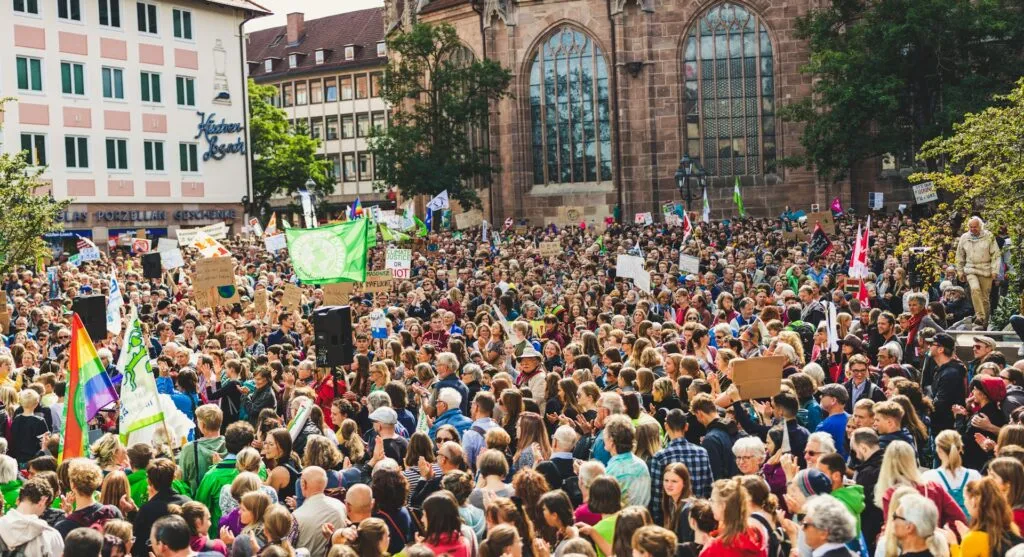
They have not taken to the streets over a cancelled school trip or an extra piece of homework. Behind the blockades at French high schools lies a protest that is about education, certainly, but also about inequality, the future and the relationship between young people and the institutions meant to represent them.
For the past week, students across France have been symbolically occupying the entrances to their schools, drawing attention to problems which, according to their accounts, are part of everyday life: teachers who are absent and not replaced, overcrowded classrooms, run-down buildings, inadequate IT equipment and the pressure surrounding Parcoursup, France’s university admissions system.
The movement began on 21 September at Lycée Saint-Exupéry in Créteil, on the outskirts of Paris, following complaints about a shortage of teachers. From there, it quickly spread. On 29 September, France’s Education Ministry recorded action at more than 330 schools, while other sources put the number at almost 410 establishments affected by blockades or attempted blockades.

The protests, however, have not been uniform. Most demonstrations have taken place without violence, but in some locations the situation has escalated into clashes and property damage. The authorities have reported hundreds of arrests, many involving minors. The government has condemned the violent incidents, while a number of students argue that their protest should not be conflated with the actions of a minority of demonstrators.
There is another feature that makes this mobilisation particularly striking: social media. Snapchat, Instagram, TikTok and WhatsApp have helped calls for school blockades and the demands of individual schools spread rapidly. The protest may begin outside the school gates, but it is also being organised through the screens of students’ smartphones.
Yet the central issue remains the state of education itself. Students in the Paris suburbs are also highlighting disparities in opportunity between their schools and those in the centre of the capital. They are not simply asking for more resources; they are asking for the same opportunities as other young people. That is where a school protest becomes a wider social question.
The question emerging from France therefore concerns us too: how much room do students have to make themselves heard before they feel they have no choice but to take to the streets?
School should be the place where young people learn how to participate in society, not simply where they receive grades. When students protest, the answer cannot simply be to send them back into the classroom. First comes a much simpler question: why are they protesting?
France, in recent days, appears to have made that question impossible to ignore.
David Benedetti