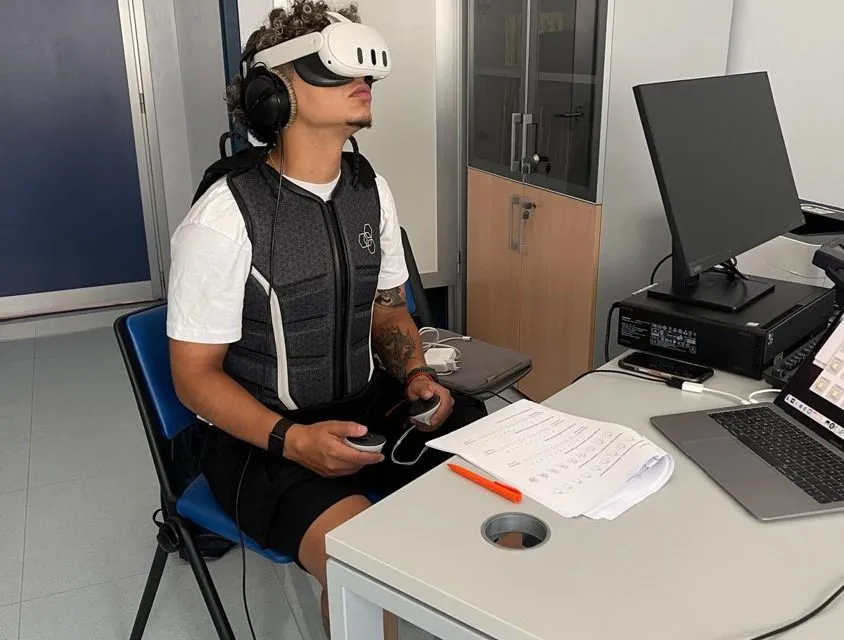
(Ennia Dall’Ora) Scleroderma: open day at the AOUI at the Borgo Roma Polyclinic
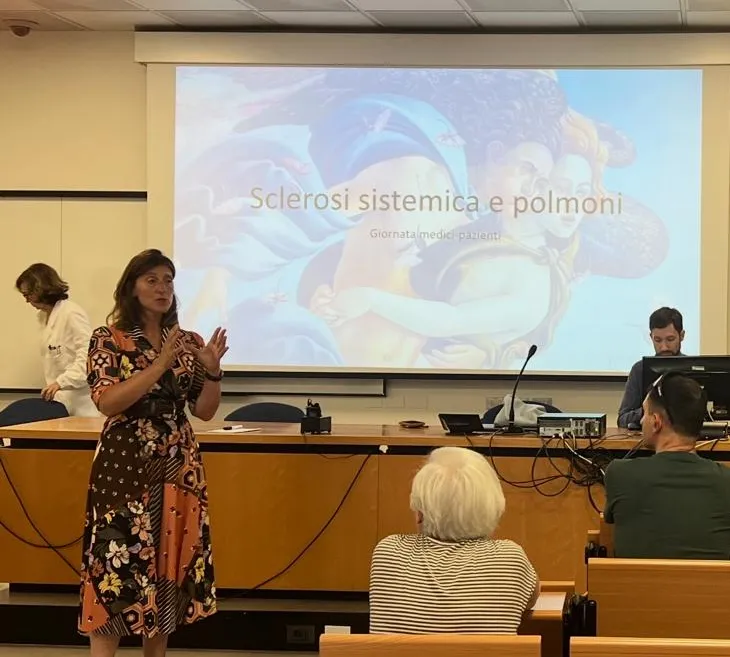
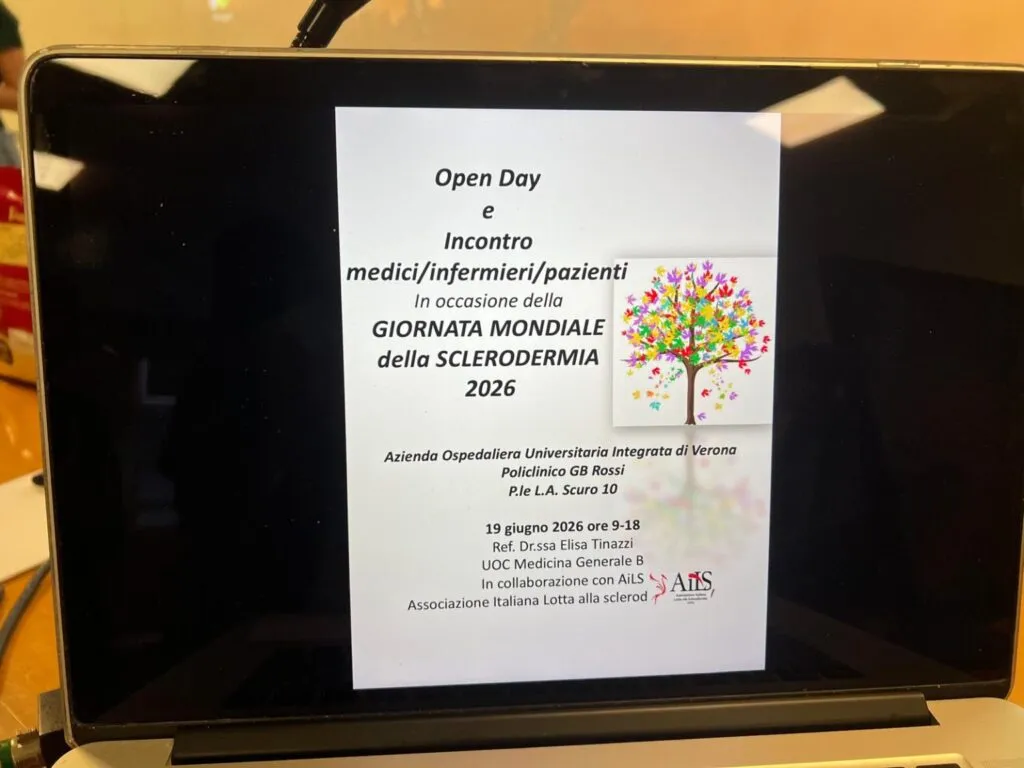
(E.D. Dall’Ora) On Friday afternoon, in the large ‘Roberto Vecchioni’ lecture theatre at the Borgo Roma Hospital, in the presence of the head of department, Prof. Simonetta Friso, who welcomed those present, a conference organised by General Medicine B of the Verona Integrated University Hospital was held to mark World Scleroderma Day.
The compound word ‘scleroderma’ is formed from ‘sclero’ and ‘dermia’. In Greek, ‘sclero’ means ‘hard’; the term ‘skliros’ is also used in modern Greek with the same meaning, whilst ‘dermia’ is easily understood, deriving from the Greek ‘derma’, meaning ‘skin’. Combining the two meanings, one might think that scleroderma causes the skin to become hard. So far, nothing to worry about, just a curious fact.
If our skin were not soft but merely harder, it would be easy to come to terms with, but unfortunately, it is not just the skin that is affected, but the internal organs too, particularly the gastrointestinal tract, the heart, and the lungs. In his address, Dr Bonisoli focused on the consequences of the condition for the lungs and the need for ongoing clinical investigations.
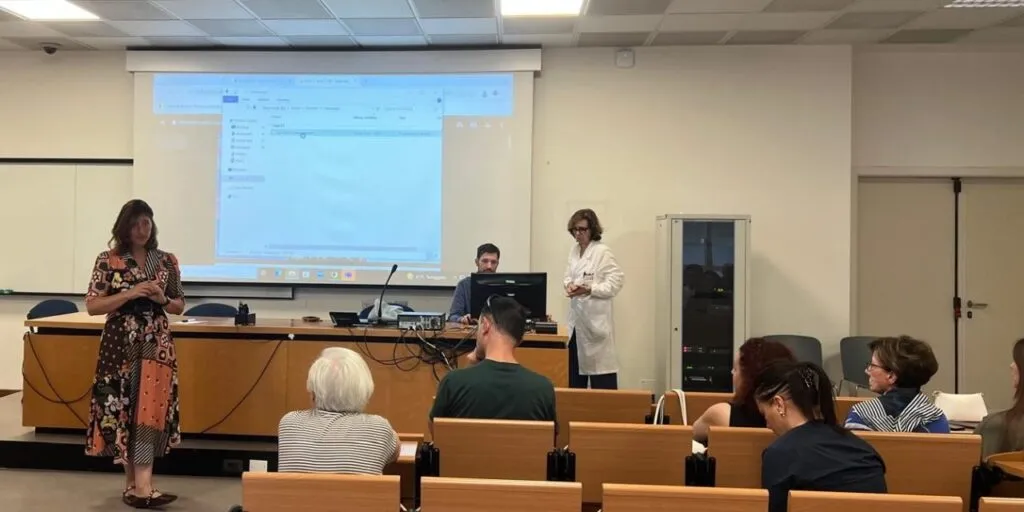
This rare, heterogeneous systemic autoimmune condition (50 to 300 cases per million inhabitants), as explained by Dr Elisa Tinazzi, head of the specialist unit at Borgo Roma, mainly affects women, although men are not exempt. It can develop at any age, particularly in one’s forties and fifties. A woman may be leading a perfectly normal life when, suddenly, her immune system turns against her own body.
Not only can the skin change, becoming less elastic, but the fingers also change shape and colour, turning white, red or black depending on the temperature of the object they touch or the outside temperature. This phenomenon, known as Raynaud’s syndrome, usually ‘heralds’ the onset of scleroderma, which manifests itself in different ways in different people.
It is not hereditary, but a genetic and environmental predisposition has been noted. Indeed, it appears that certain solvents, thinners or dusts such as silica may increase the risk of developing the condition. There is no cure for scleroderma; there is no specific or miracle drug, but today there are medicines that aim to treat the affected organs and others that seek to ‘put the disease into remission’ or at least to alleviate the physical pain it causes, with consequent effects on psychological well-being. It is well known that physical pain affects everyone’s psychological state.
The patients who meet with doctors and nurses once or twice a month in the blue room on the seventh floor of the ‘Scuro’ Polyclinic are well aware of all this; they spend 7 or 8 hours there receiving an intravenous infusion of a substance which, by dilating the blood vessels, appears to help both the skin and the organs. A sort of internal balm. The two nurses speaking at the conference emphasised the importance of collaboration between nursing staff and patients, whilst also offering some much-appreciated practical advice, such as soaking one’s hands in warm water before venipuncture or blood tests, or applying a good moisturiser to the skin.
Dr Tinazzi herself, in her presentation, emphasised how relationships between patients and between patients and hospital staff are fundamental to identifying exactly the care each person needs, as the medical approach should not focus on the illness but on the person affected by it. A single, holistic whole.
Many people are suffering from rare diseases that remain unknown to us until a family member, a friend or the person themselves is affected. Not all of them make the news. Many patients live with their illness without shouting their anger to the world, perhaps feeling guilty and often dwelling on which episode in their life they should blame for their physical weakness, which subsequently led to a rare and serious condition.
But no patient leaves the outcome to chance. They fight. Against themselves, against cuts to healthcare spending. They fight to find a new way of life that makes room for medical investigations, treatment, and the myriad limitations, as the quality of daily life, in the case of systemic sclerosis, changes considerably.
Some patients even fight for the right to disability benefits, which in these specific cases should be granted; instead, they must endure a lengthy process that makes their health even more precarious. When we think of a disabled person, we all conjure up the image of a wheelchair, of someone with a physical disability.
People with scleroderma, like those with other rare diseases, do not need a wheelchair, but they nonetheless need understanding, help, and a gesture of affection, which always brings a sense of closeness and hope. Hope that one day, thanks to proper, well-guided scientific research, we will talk about scleroderma and other rare conditions as casually as we do about a grazed knee. Nothing serious, nothing grave, nothing unsolvable.