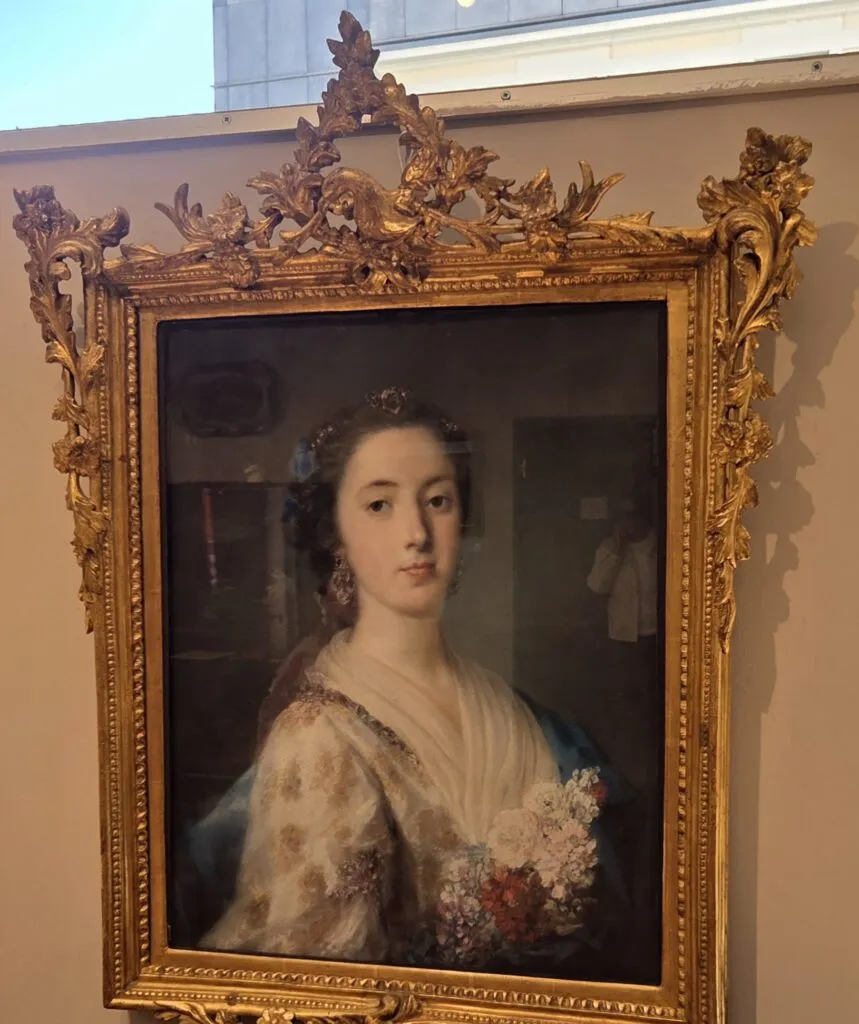
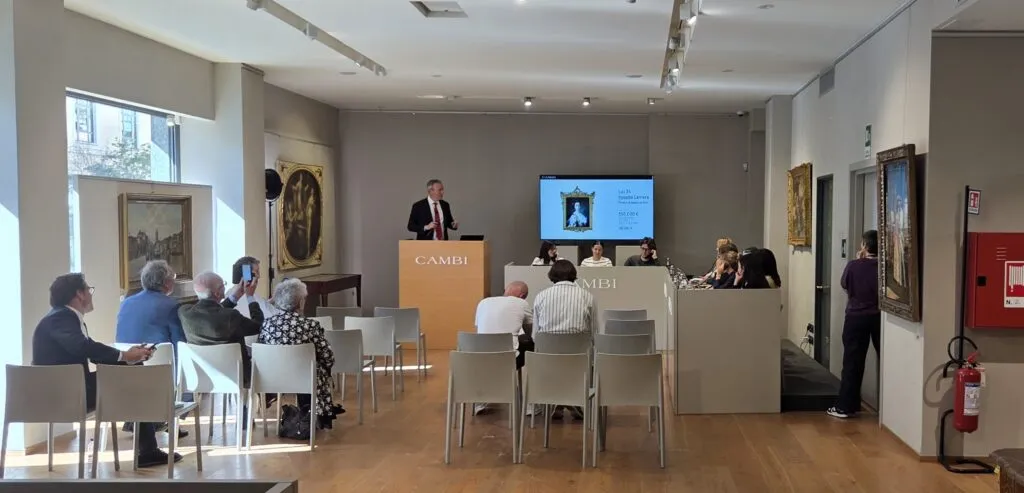
(Angelo Paratico) The Cambi auction house in Milan achieved an extraordinary result by selling a delightful pastel portrait by Rosalba Carriera (Venice, 12 January 1673 – Venice, 15 April 1757). This 48 x 56 cm female portrait on paper was estimated at 35,000 euros but sold for 355,000 euros (plus the auction house’s commission). A bidding war between three anonymous bidders, none present in the auction room, enlivened this remarkable sale.
Carriera, still greatly underrated today, is remembered for introducing pastel portraits and for her prolific output. She gained recognition throughout Europe, to the extent that, in addition to princes and princesses, even King Louis XV of France commissioned portraits from her and had himself portrayed by her.
This portrait by Carriera of an unnamed Venetian lady is truly extraordinary for the emotions it evokes. Napoleon Bonaparte kept the Mona Lisa hanging in his bedroom for nearly five years; thus, a portrait like this by Carriera could find a place in the bedroom of one of the many millionaires scattered across the globe – provided they possess an eye for the soul.
On the back of the painting is a seal from the old London auction house, Thomas Agnew and Sons.
The International Fame of Rosalba Carriera
Rosalba Carriera, a Venetian, had a mother who was a lacemaker and a father who was a chancellor of the Venetian Republic. Along with her sisters Giovanna (1675–1737) and Angela (1677–1760), she received an excellent education that, in addition to literature, poetry, and music (violin), also included the study of French and English. Her reputation as a portraitist grew rapidly, and in 1708 she painted the portrait of Frederick IV of Denmark, who stayed in Venice for several months.
A few years later, in 1723, she was invited to Modena by Duke Rinaldo d’Este to create several works, including portraits of his daughters. In 1725, she painted The Four Seasons for the English diplomat Joseph Smith. Smith already owned about twenty pastels by Carriera, and the artist first sent Spring and Autumn to England, followed later by Summer and Winter. The paintings entered the British royal collection in 1762, and George III had Summer and Winter hung in his bedroom at Buckingham Palace.
In May 1730, Rosalba Carriera travelled to Vienna, summoned by Emperor Charles VI to paint his portrait, which is now lost. During her stay in the Austrian capital, she also painted portraits of Metastasio and Daniele Antonio Bertoli (1677–1743), an artist recognised at the imperial court. Rosalba Carriera was the first artist to use ivory in miniatures, a technique widely used in China.
Cataract Surgery
In 1746, the famous portraitist was struck by an eye disease. That would be her last year of work: despite her advanced age, she refused to give up and underwent surgery by a surgeon in August 1749, but after a brief improvement, complications worsened her condition, leading to total blindness in 1750. She died in Venice on 15 April 1757.