(Angelo Paratico) It seems that Nolan’s film, loosely based on Homer’s Odyssey, is proving a box-office success. Controversy is always the best form of publicity. Moreover, the investment made in promoting it has been substantial and, as in the world of books – which is far older than that of films – scandal and controversy have always propelled works to the top, only for them to fade into obscurity and fall out of favour. There are many examples, but once the dust has settled, one can look calmly at the work created by a writer or a director and then judge whether it is true glory or mere fame.
One positive aspect of Nolan’s film, however, is that it has made the masterpieces attributed to Homer – the Iliad and the Odyssey – popular throughout the world.
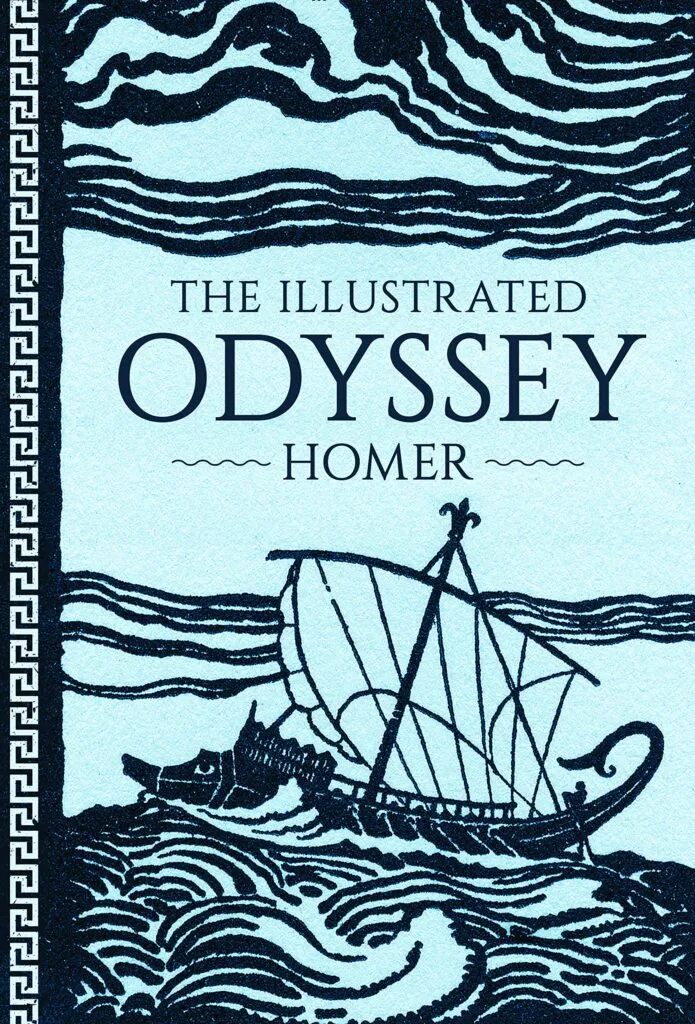
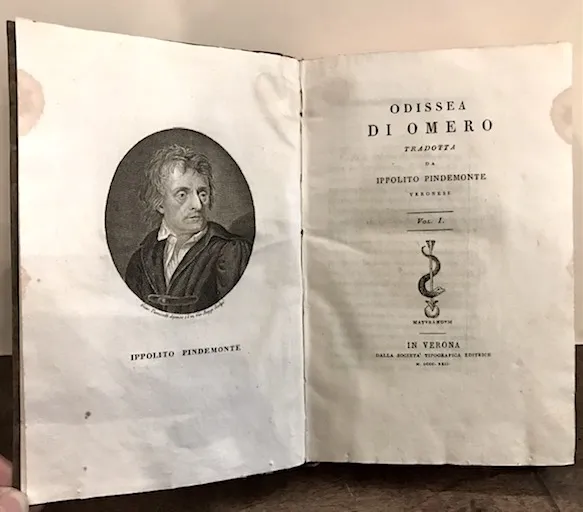
The finest Italian translation of the Odyssey remains that by Ippolito Pindemonte of Verona, but in the English-speaking world few realise that the finest translation of the Odyssey from Greek into English was the work of Lawrence of Arabia, author of the immortal masterpiece The Seven Pillars of Wisdom. Before becoming a camel-riding guerrilla fighter battling the Ottoman Empire, he was also a highly erudite scholar, specialising in Crusader fortresses in the desert and in Classical Greek
An extraordinary book on Ulysses was published by Paolo Granzotto in 1988. In it, he describes the Homeric hero in his entirety, drawing on existing sources. Such a beautiful and well-researched book deserves to be reprinted
In a way, we still live surrounded by the fabulous lies created by that scoundrel Ulysses, who, had he met Nolan, would have confirmed that Helen was indeed black, just to be resurrected from the dead and brought back into our world.
He was certainly not the legitimate monarch of Ithaca; he was born in Corinth or Crete and spent his childhood in Knossos, and in fact he felt Cretan because of his personal traits: his passion for travel and trade (merchants often lie), which made him a typical Cretan. His parents were Anticlea and Sisyphus, not Laertes, although he always lied on this subject, as Sisyphus was his real father, a bandit and a privateer. Sisyphus stole his mother away from her lawful husband, Laertes, and then got her pregnant in Crete.
When he was ten years old, Odysseus had to undergo the rites of initiation, spending three months alone in the woods at the foot of Mount Ida, without weapons or food. He also had to attack an ugly priestess who lived alone and force her to lie with him.
Quite a feat for a child of his age. He passed the trials with flying colours and then, once his mother had grown weary of Sisyphus’s scheming, she returned to her husband Laertes, taking Odysseus with her. Once he had grown up, she sent him to live with his grandfather Autolycus, himself a thief and a scoundrel. The two got on perfectly well, and Odysseus must have learnt a great deal from his grandfather.
Then came the fateful moment of his journey to Sparta, where a decision was to be made regarding a husband for the beautiful Helen. Odysseus realised he stood no chance: he was neither handsome nor rich, he was not a true nobleman, and his relatives were of very dubious reputation. He therefore set his sights on a niece of the King of Sparta, Penelope, daughter of Icarius, the king’s brother. She had a thick mane of black hair, large eyes, snow-white skin, a full bosom and a slender waist, just like Irene Papas.
Tension at court was mounting ever higher, and Tyndareus, King of Sparta, feared it would end in a brawl sparked by those who had failed to win Helen’s hand. Odysseus then came up with the idea of making them swear an oath to unite in defence of Helen’s future husband. An excellent idea, but one that led to the Trojan War.
Homer presents Odysseus as a peculiar king, who did not actually reign and was always travelling, and who said of himself: ‘I did not like staying at home. But I loved ships and raids, spears and arrows, those dreadful things that send shivers down others’ spines’.
He was also a strange warrior: Homer makes no mention of his concubines – who may not even have existed – and he never wished to attack, only to defend; he would go to the front line dressed in the Cretan style, wearing a helmet made of boar’s tusks and a leather tunic; indeed, he did not even own a war chariot like the other warriors. He never believed it was a good idea to resort to war, as he preferred diplomacy and cunning. Yet he was by no means lacking in courage. During an argument with Achilles, when he saw him snorting in anger, he had the courage to say to him: “Be quiet and obey, for you may be a stronger warrior than I, but I am wiser, more experienced and older than you. You owe me respect!”
Because of his habits and vices, he strikes us as a modern man, and this makes Nolan’s decision to reinterpret him understandable, but only time will tell whether his work will be truly celebrated.