By Angelo Paratico
Saint Roch of Montpellier (c. 1345/1350–1376/1379), better known as San Rocco, was a French pilgrim and healer revered by the Catholic Church as the patron saint of plague victims and of countless towns and villages across Europe.
The Church of San Rocco in Quinzano
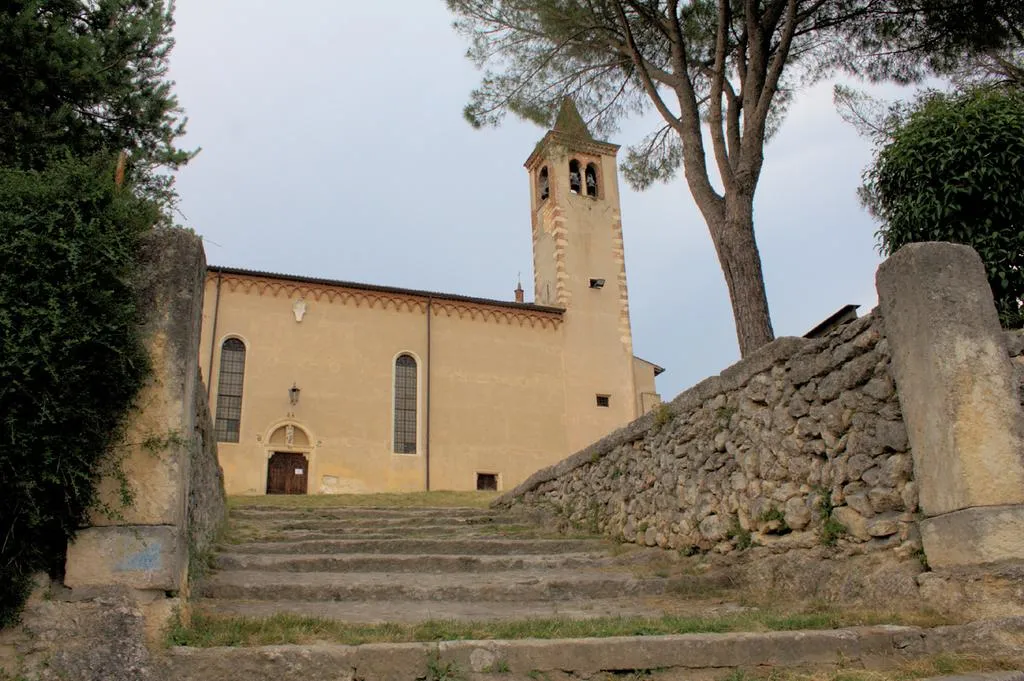
On the hills north of Verona, between the villages of Avesa and Parona, lies the district of Quinzano, home to the Church of San Rocco. Standing on Via San Rocco beneath Monte Cavro, the church is overlooked by the ancient hermitage of San Rocchetto.
Originally dedicated to St Alexander, the church was consecrated in AD 844 at the request of the Archdeacon Pacifico, according to a document dating from 1140 that is now preserved in Verona’s Capitular Library.
Between 1478 and 1480, Verona was devastated by one of the deadliest outbreaks of plague in its history. The Black Death, which had travelled west from Asia, claimed the lives of up to 60 per cent of the population. In response, the city authorities organised a solemn procession from San Giovanni in Valle to the Church of St Alexander in Quinzano on 16 August, the feast day of St Roch, to whom the church was subsequently rededicated. That relatively late dedication may also explain why no mass graves of plague victims have been discovered at the site.
On 19 July 1486, a public deed transferred the church from the Chapter of Canons to the Municipality of Verona, which remained responsible for its upkeep until 1868, when the city council ended all civic participation in religious ceremonies.
The General Catalogue of Cultural Heritage records what followed:
“The municipality decided to relinquish its patronage rights over San Rocco and return them to the Chapter of Canons. The Canons, however, refused to accept the transfer because the building had fallen into such poor condition that it was in danger of collapse. Fearing the sanctuary would be closed to worship, the people of Quinzano — then an independent municipality — petitioned both the Chapter and the City of Verona. By council resolution of 15 April 1873 they requested to assume responsibility for the church. The formal transfer was completed on 30 May 1878, when San Rocco became the property of the Municipality of Quinzano.”
When Quinzano was incorporated into the newly enlarged City of Verona on 17 February 1927, ownership of the church returned once again to the municipality.
The Myth of the Striped Church
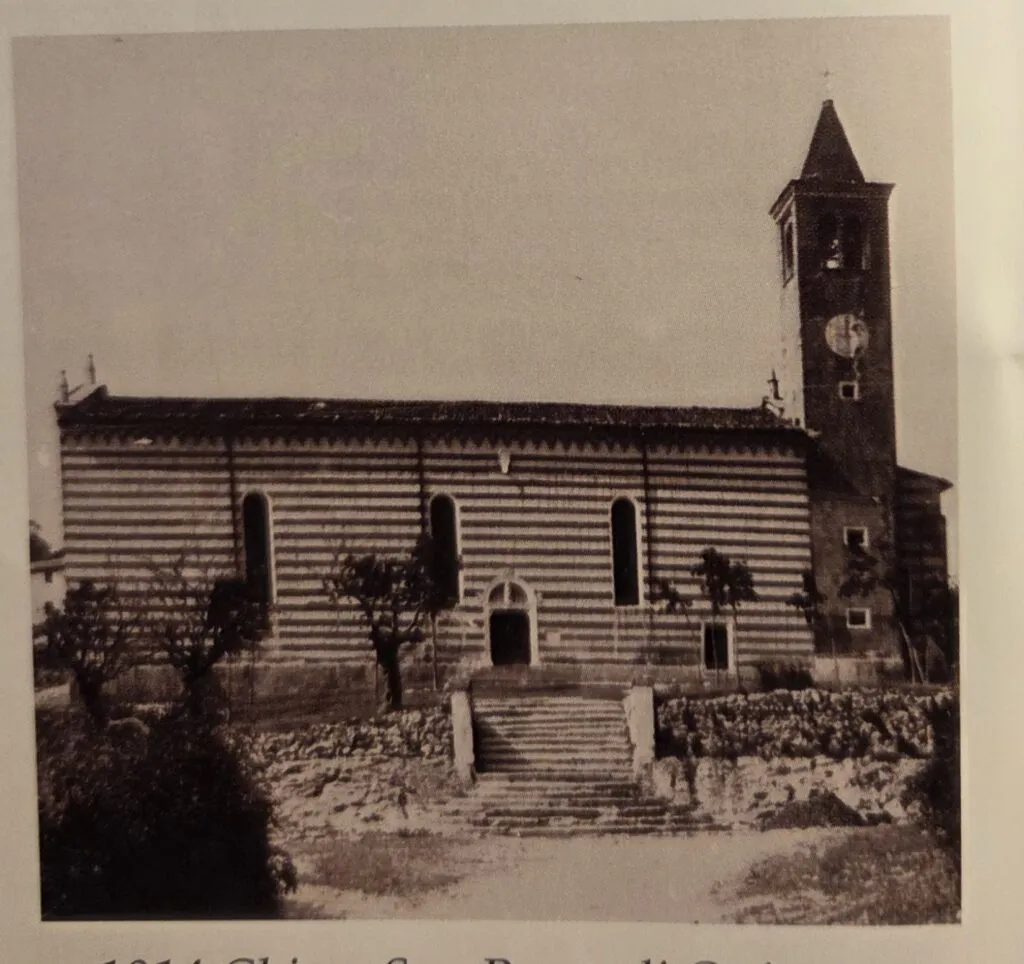
Recent restoration plans have reignited an unlikely controversy. Some have argued that the façade should be repainted with alternating coloured bands, citing an old photograph that appears to show the church decorated with stripes.
The argument is rather like mistaking a horse for a zebra simply because of a photograph. Horses come in many colours; zebras have stripes. The two should not be confused.
The evidence is unequivocal. Archaeological investigations, including stratigraphic analysis and paint sampling carried out under the supervision of Verona’s heritage authorities, have demonstrated that the striped appearance existed only for a brief period in the building’s long history and bears no relation to the architectural traditions of the Veneto.
Unlike parts of Liguria or Tuscany, where alternating bands of stone are a characteristic feature of Romanesque and Gothic churches, Veneto has no tradition of churches with striped façades. The nearby hermitage of San Rocchetto follows the same local vernacular, built entirely of native stone and brick without decorative banding.
What About the Old Postcard?
The famous postcard showing the church with coloured stripes almost certainly reflects a decorative intervention commissioned by the local parish priest. The façade was painted in alternating ochre and red bands, using pigments mixed with limewash, in an attempt to give the building a more eye-catching appearance.
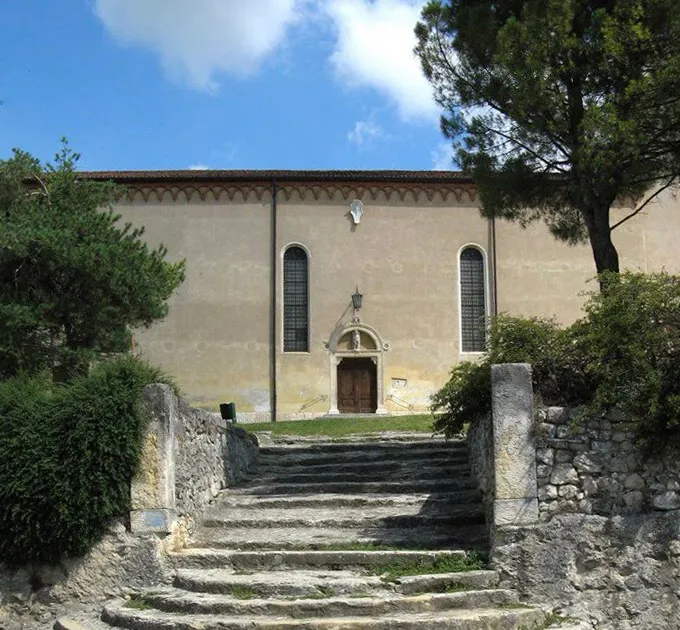
For a few decades the church retained this unusual finish, artificially imitating the two-tone masonry of Ligurian Romanesque architecture. As the years passed, however, the painted coating deteriorated and peeled away. When it was eventually removed, it revealed once again the pale local stone that had always formed the church’s authentic exterior — the same stonework visible today.
A Return to Its True Appearance
The City Council of Verona has now approved a major restoration of the façades of the Church of San Rocco, funded through a private donation. The work will restore the building to the appearance that best reflects its historic character, allowing it once again to display the understated beauty it possessed during the sixteenth century.
From 11 to 16 August, Quinzano will host the 547th edition of its traditional San Rocco festival, where visitors can enjoy classic Veronese cuisine and pay their respects to the saint whose name the church has proudly borne for more than five centuries.