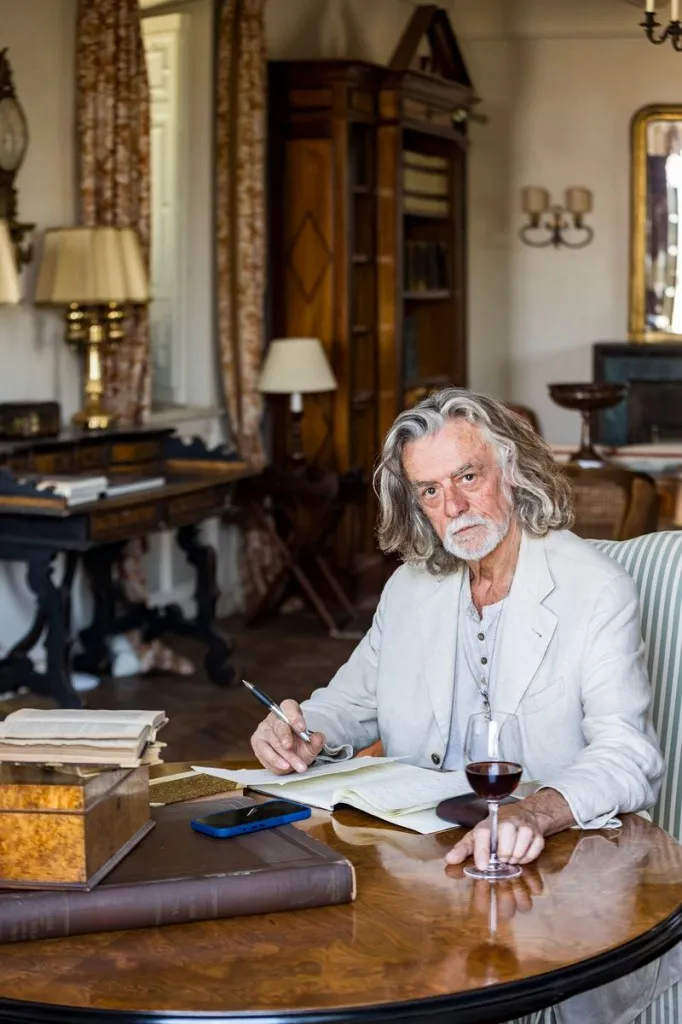
(Angelo Paratico) We met M. A. Franklin Baumgarten in San Rocco di Quinzano, a Renaissance monument built on gentle hills overlooking the ancient road that for thousands of years has led merchants and armies to Trento and the Brennero. The occasion for our meeting was a presentation on Ancient Egypt.
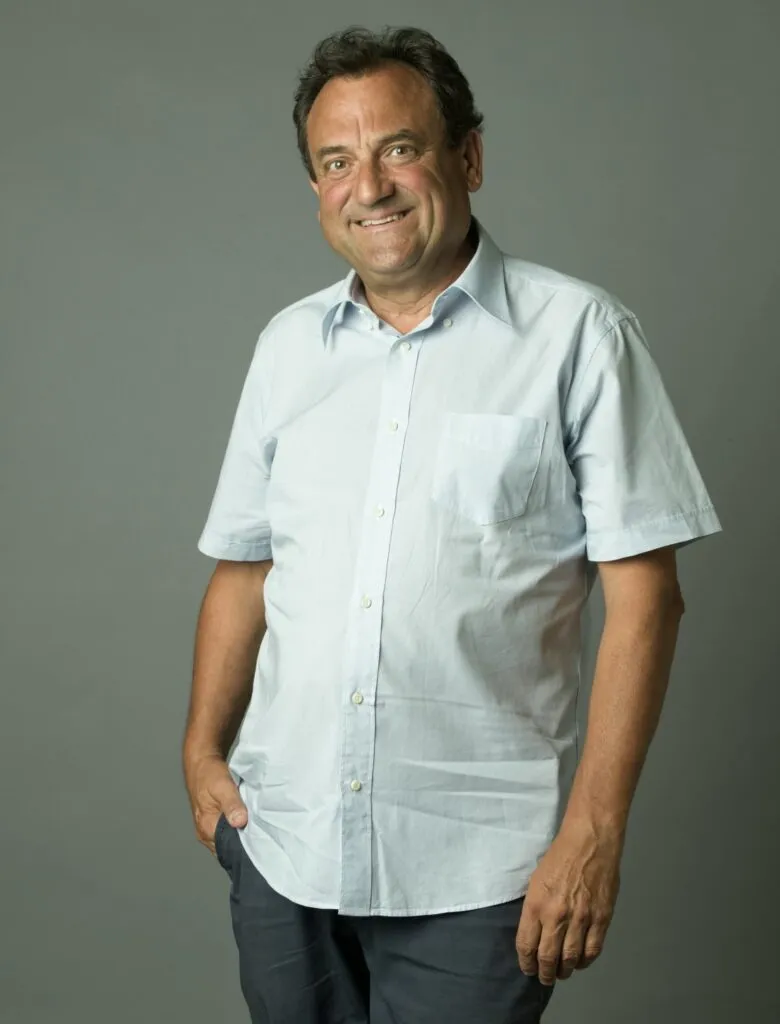
Dr. Baumgarten is a renowned Egyptologist and a specialist in the Pharaonic language. The room above the church was packed with spectators, who were enthusiastic about his explanations and the slides with his colorful sketches. It was a truly unforgettable night for everyone. He does not use a camera but a sketchbook, in which he paints using gouache and jots down notes and ideas, the same system used by Leonardo Da Vinci.
Good afternoon, Dr. Baumgarten, and thank you for this interview. Where and when were you born?
I was born in Innsbruck, Austria, on 3 August 1966. My father, Fritz Heinrich Baumgarten, was born in Hamburg in 1925; he was a translator and wrote poetry. From my father, I learned much about history, Art history, and classical music. My American mother June Jackson, born in 1929 in Connecticut, took care of us children, me being the youngest of four. She taught me to appreciate literature. I have dual citizenship, both American and German.
You are an Egyptologist
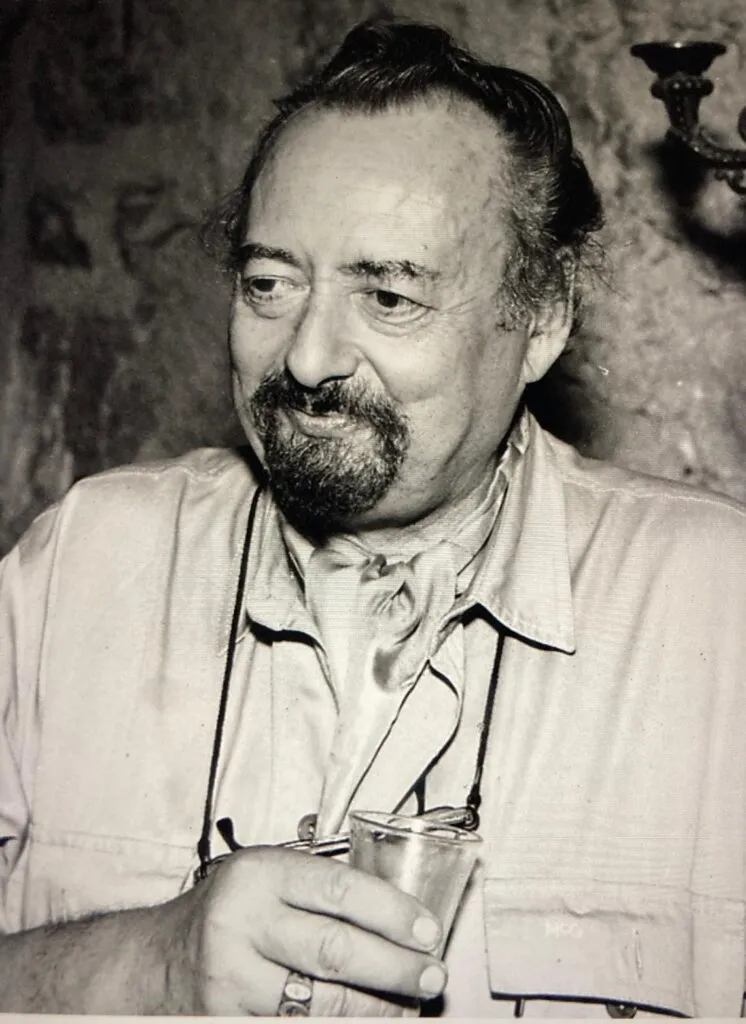
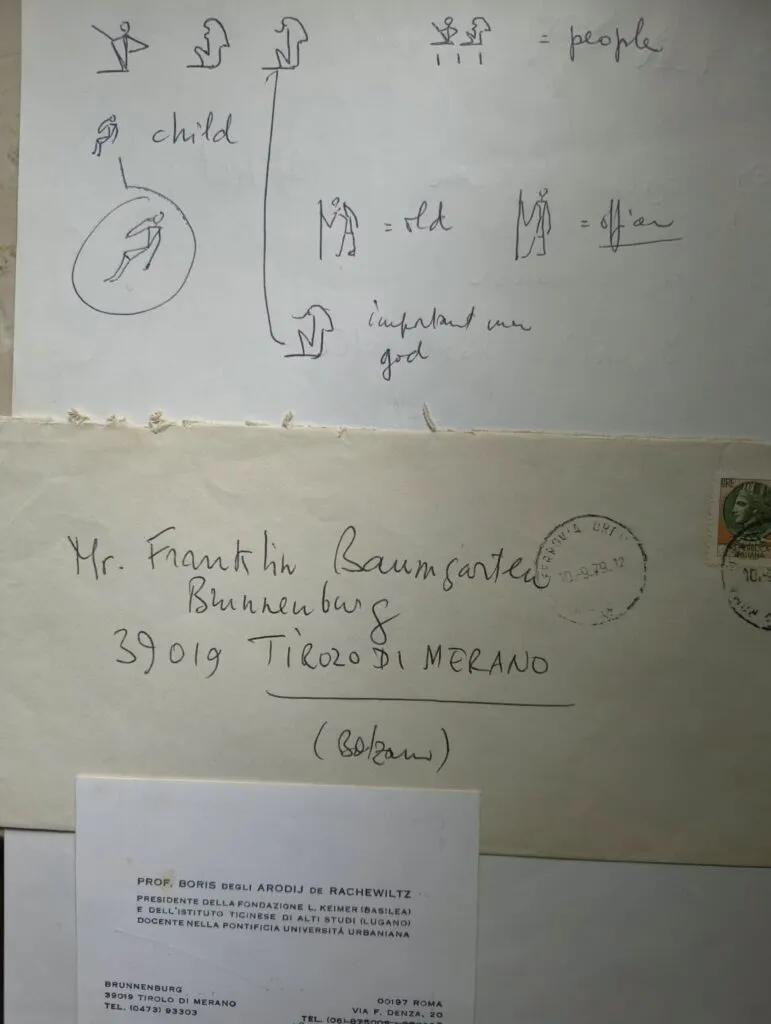
My interest in Egyptology was definitely inspired by an exhibition on Pharaoh Akhenaten and Queen Nefertiti in Munich in 1976 and a subsequent visit to the British Museum of London, which became my favorite museum. My mother took me to these places, always encouraging the various interests of my sister (classical Ballet) and brothers (mountaineering, etc). I remember how she got me out of school to be able to see the Munich exhibition and the London British Museum. Always moving and travelling from one destination to another, I lived in Trieste, New Haven/ Connecticut, Varese in Lombardy, and many other places, until in 1979 my family moved to Brunnenburg above the South Tyrolean town of Mary Pound. It was the castle of Mary de Rachewiltz and her husband Boris de Rachewiltz. At the age of 13, I was introduced to my first footsteps of Middle Egyptian in hieroglyphic lessons by Boris de Rachewiltz following Alan Gardiner’s Grammar. Never abandoning a passionate interest in Ancient Egyptian culture, it was only in the year 1999 that I studied my 10 semesters of Egyptology and Coptology at the University of Göttingen, receiving my degree of Magister Artium in the year 2004. During these years and since then, I have travelled to Egypt several times and have written various articles for newspapers and given a series of talks in Rome, Aquileia and Verona.
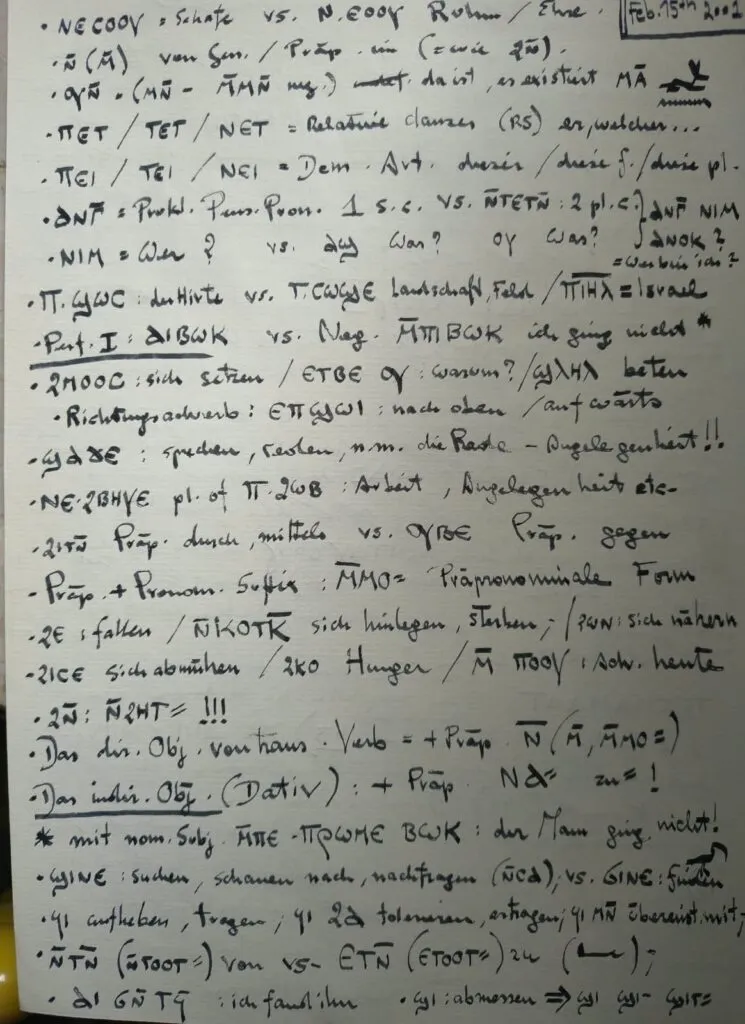
My greatest achievement is still in progress after eight continuous years: the translation of former Professor Rainer Hannig’s Egyptian dictionary from the hieroglyphics into English. 40.000 words given 120.000 references in a 1500 pages concise dictionary of which only 80 pages are missing. The publication of this dictionary is pending an update of its
German edition as well as the dictionaries of resources of the New Egyptian vocabulary. While this is being done in Berlin by a team of scholars, I have done my translation at my own expense of time and other costs
Extraordinary, you are close to Ezra Pound’s family.
How did I meet or, better say, get introduced to the world of Ezra Pound and Mary de Rachewiltz in Brunnenburg? One reason was my father, who spoke several languages fluently, wrote poetry (making use of various languages), and was attracted by the Cantos of Ezra Pound.
At the same time, my dear Mom, who constantly read literature and corresponded with writers like Simone de Beauvoir, also wrote to Mary de Rachewiltz after reading her autobiographical book Discretions. A friendship came about, and my parents, always
moving from one place to the other, why not move to Merano from Innsbruck?! The third reason was my sister, who, while studying classical Ballet in Dorsoduro Venice became friend with Olga Ridge, the lifetime companion of Ezra Pound. All encounters occurring independently eventually led to most of my family moving to Brunnenburg, once more adapting to a new country, mentality and environment.
I remember that year, 1979, in Brunnenburg, I was 13 years old, and Boris de Rachewiltz was a great inspiration! Boris, as an Egyptologist, gave me hieroglyphic lessons. He was a severe teacher, sometimes suffering malaria attacks, but incredibly generous. For my 13th birthday, I was given an original Ancient Egyptian seal depicting the Sun God Ra 3 times. The year at Brunnenburg was the happiest year of my youth, I was never excluded from participating in lunches and dinners with all kinds of interesting people. Among these people I remember the German Egyptologist Elmar Edel, the mountain climber Reinhold Messner, the Pound authors Noel Stock, Christine Brook-Rose, Massimo Bacigalupo, the sculptor Franca Ghitti, the editor Vanni Scheiwiller, and while staying at dear Olga Rudge’s in Venice I will never forget Professor Ghan Singh from India cooking us a meal with his spices, which he unfolded from a blanket. On one occasion Olga Rudge had tears in her eyes while she pointed out a photograph of Ezra Pound, remembering what beautiful hands he had.
During all these unforgettable meals I felt totally free to think. Of all Brunnenburg visitors never, ever anyone present had made any discriminating comment concerning other people, their nation, belief or ethnic background. We were all simply people with many interests.
How long have you been living in Verona? Why Verona in particular? What do you like and dislike about Verona?
After leaving Brunnenburg my father’s work led to Verona for the first time. For me this involved and meant leaving the inspiring Brunnenburg environment which I so much adored, but we children were used to changes. Once again, it wasn’t at all easy for my father to feed such a big family, a sister and 2 brothers at the liceo, me third Media class, this time obviously Italian. During the long summer holiday, I remember picking peaches and making hay for a nearby peasant as we stayed in Boscomantico. In August I remember the Bologna tragedy of that year while returning by train to Brunnenburg via Bolzano to Merano and always so welcome by dear Mary de Rachewiltz. Boris de Rachewiltz continued to send me easy lessons on hieroglyphics from Rome and with some of the money I earned and my ever-generous mother I love to remember my first journey to the Egyptian museum of Turin! Many years after finishing the Liceo and while making a living as a tourist guide during Verona opera seasons, I moved to Hannover in Germany and eventually, finally, I studied Egyptology.
What do I like or dislike of beautiful Verona? I dislike the embarrassing mess of plastic souvenirs at the Piazza Erbe market. When I was 14 years old, my father had reduced means, but he bought me aquatic turtles at the Piazza Erbe market, which at the time was a real market, as you can still find them in Padua or even tourist-crowded Venice. In those years, when my father had some time off he got me books on Egyptian history from the civic library; one was only able to keep them for 14 days, so I copied hundreds of pages by hand, keeping alive my passion.
Besides the fact that I am tired of changing home, always involving filling, carrying and emptying several Chiquita banana boxes of heavy books, I wish to remain in Verona, one of the most beautiful cities I know in Italy. Having worked as an authorized tourist guide all over Italy in the past 42 years I am convinced of what I’ve stated!
What future do you envisage for Verona? Do you have any links with the University of Verona?
Verona has developed a lot in the past years. More and more, important events take place in town, some of which are international, such as the final event of Italy’s third Winter Olympics in the Roman amphitheater. Culturally speaking Verona has made much progress, for instance in opening the precious Capitolare library to the public. In the near future I hope.
Verona will find a solution in dealing with the increasing phenomenon of overtourism. As for the University of Verona, I must confess that I haven’t invested any time so far in creating any contacts, but this doesn’t mean it’s not on my agenda.
What was your most significant archaeological discovery in Egypt? Which of the essays or books do you publish are closest to your heart?
Personally, I have never made any archeological discovery on my own, since my Egyptological studies concern the linguistic aspect of pharaonic civilization. Anyhow. when in Egypt, I was sometimes present at recent discoveries, such as an excavation in front of the temple of Karnak, where I was among the first people to be shown a newly unearthed big stela by the Egyptian authorities. In the past years I have published articles in Incontro di Popoli e di Culture and specialized Egyptological publications (Hannig Lexica Aegyptisches Woerterbuch, Hildesheimer Aegyptologische Beitraege) as well as newspapers (la Voce di Romagna). I am proud of a recently published article of mine in Hildesheimer Aegyptologische Beitraege nr 57 with the title Considerations Regarding Two Sarcophagi Of The Old Kingdom In The Slovenian Cemetery of Vipava.
In the past eight years, I have been working every day on the translation from hieroglyphic into English of Rainer Hannig Handwoerterbuch. 40.000 words with its references, 1500 pages is yet awaiting publication.
You are a busy person! What are your plans?
I am thinking of writing a biography about Boris de Rachewiltz. A few years ago Mary de Rachewiltz suggested the idea, so I put on my thinking cap! I am very excited about my next journey to Egypt in December and January. From Cairo, I will visit the oases of Baharyia, Farafra, Dakhla and Kharga, which have been off-limits to the public since 2015. From Kharga I will return to the Nile Valley and head back North to Cairo, visiting the unique tombs of Beni Hassan, some Coptic monasteries and the archeological site of Tell el Amarna. And surely I won’t forget to bring a Moleskine for my annotations and a set of travelers’ watercolors for my sketches!