An ancient Veronese definition for a beautiful brunette is: “l’è una bela tartarina” (she is a beautiful Tartarina). Incredibly, the reference is actually to Tartaria as a geographical area. This clearly indicates that even in Verona, after the Black Death, servants arrived from East Asia, whose genes and chromosomes have now been incorporated into the Veronese population.
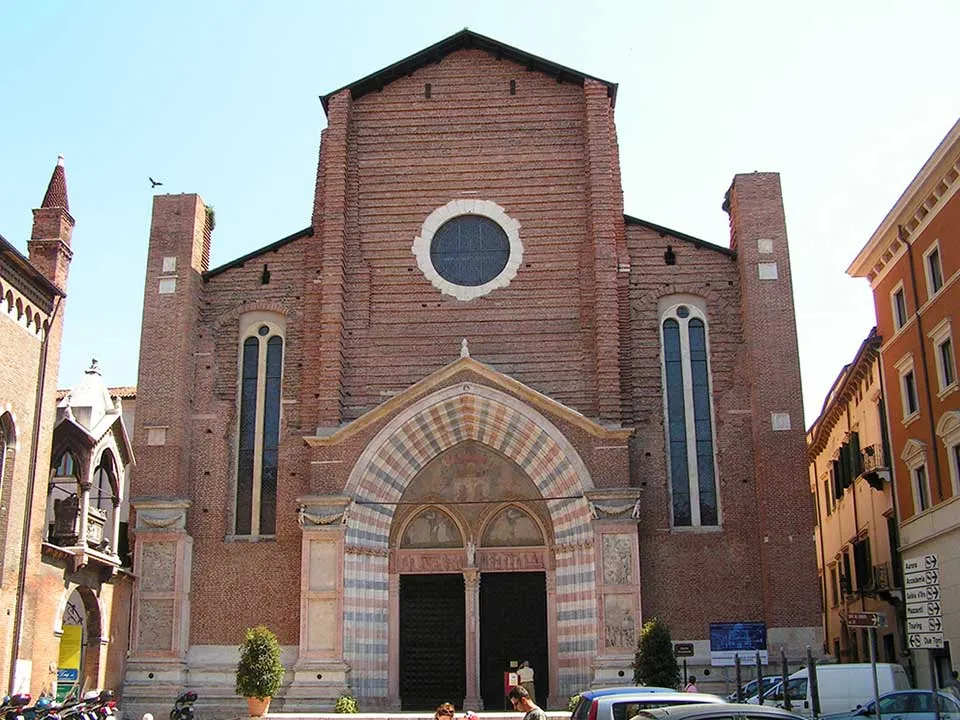
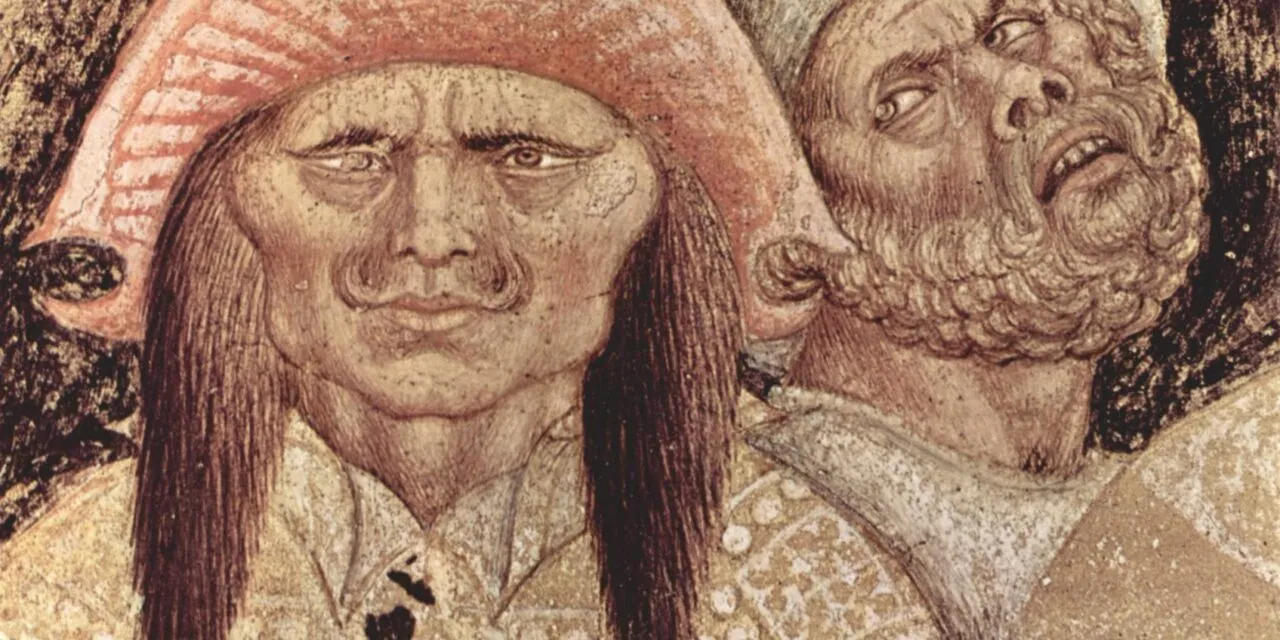
Thousands of slaves, once they reached Crimea, were resold to Genoese and Venetian merchants, and more than ninety percent of them were female, aged between 8 and 18. They were generally classified as Tartars because, in the eyes of Europeans, they resembled the Mongols, also known as Tartars. We can admire an impeccably painted Mongol warrior by Pisanello in the Basilica of Santa Anastasia here in Verona. No one else in Europe at the time had depicted one with such precision. When we think of slavery, evocative images of cotton plantations in the United States of America come to mind. Yet slavery was widespread in Italy until the mid-18th century. The Enlightenment economist and philosopher Melchiorre Gioia (1767–1829) correctly pointed out: “It was not religion that made slavery disappear from most of Europe, but the slow progress of the arts and luxury. It was not religion that destroyed slavery: slaves existed for many centuries alongside the altars. Slavery has been declining due to the progress of philosophy, and the rulers who currently profess it place their glory in calling serfs to freedom.” There are several notarial records dating back many years that reveal this trade, and there are also some Chinese people, indicated by the formula ex orta cathaiorum, meaning from China (Cathay). This trafficking of human beings from East to West is undeniable, given the abundance of original documents still preserved in the archives. All this is surprising, as a real removal from our collective memory has taken place. Many historical documents from Verona were destroyed during the Venetian occupation, but in Tuscany the archives have survived almost intact, and there are many examples of baptisms, purchases, and bail bonds.
The importation of slaves was due to the social chaos caused by the plague, known as the Black Death (1346–1353), which killed 60% of the European population in a matter of months. The disease originated in the eastern steppes, but after the initial chaos, it accelerated social development, freeing the proletariat, as it reduced the number of workers available to work the land and transformed tens of millions of servants, only half of whom had been redeemed, into free farmers and, in the following century, into landowners. The plague was defined as a turning point in human history – a drastic statement, but one that contains more than a grain of truth. The disease certainly brought radical and irreversible changes to European society, as the fields could not be cultivated and the masters who lived in the cities had to compete to hire workers. On the eve of the epidemic, Tuscany was one of the richest and most densely populated regions in Italy, with about two million inhabitants. In 1347, about 94,000 people lived in Florence alone, but after the plague struck in March 1348, the number fell to about 37,000. The plague found fertile ground in Florence and its countryside because they were already prostrated by natural and man-made events. The legendary fortitude of the Florentines was severely tested several times in the space of a single generation: the war against Pisa in 1341; earthquakes and torrential rains in 1375, which caused floods; a financial catastrophe in 1346, caused by the failure to repay a huge loan granted to King Edward III of England – this was the monstrous sum of 1,365,000 gold florins lent by Florentine bankers to enable the sovereign to wage his war in France. Finally, in 1347, the city was hit by famine and again by an earthquake. The disease arrived from the Black Sea, where Genoese and Venetian merchants kept trading posts, trafficking with the Mongols of the Golden Horde. Certainly, wealthy individuals in Verona purchased Tartar slaves in Venice and then put them to work in their homes and fields. In Verona, to curb the numerous cases of kidnapping, sexual violence (strangers entering homes and raping other people’s slaves), and riots, draconian laws were introduced to try to stem these unpleasant phenomena.