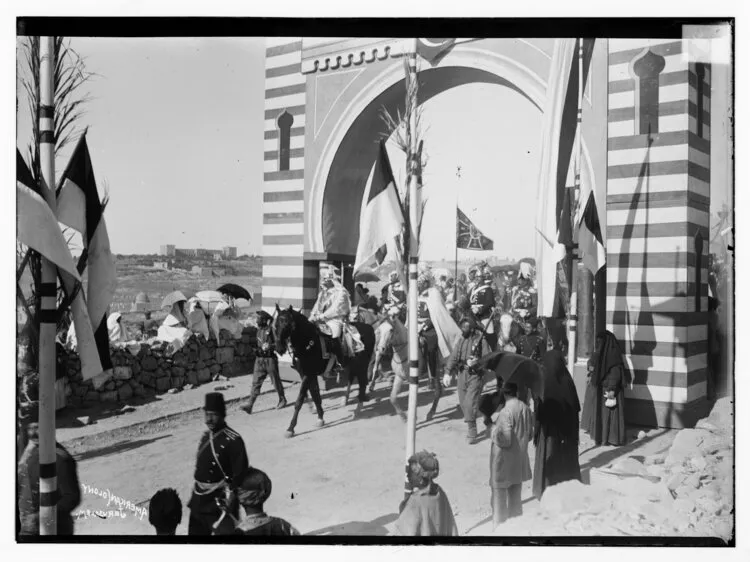
(Angelo Paratico) Kaiser Wilhelm II’s triumphant entry on horseback into Jerusalem on 31 October 1898 – then part of the Ottoman Empire – sent shockwaves through Europe. He was the first European head of state to visit the city since the time of the Crusades. His arrogance was immediately apparent from the fact that he had a gap cut in the walls of the Old City simply because his spiked helmet would not fit through Jaffa Gate. His arrival changed the whole situation. The British, French and Russians had established a presence in Jerusalem because they wished to exert influence within the Ottoman Empire, as part of their mutual rivalries. Wilhelm did not merely want influence; he wanted to build an empire that would include Turkey. In 1903, he secured the right to build a railway from Berlin to Baghdad, thereby extending German power deep into the region.
With his entry into Jerusalem, he had set in motion the monstrous mechanism that, through a series of misunderstandings, would lead to the First World War.
In 1915, with Bulgaria’s entry into the war and the invasion of Serbia, the Germans gained access to the Bosphorus, and Britain felt threatened. Turkey attempted to occupy Egypt from the Suez Canal but was repelled by General Murray in August 1916; further attacks in March 1917, targeting Gaza, were repelled by Turkish and German forces, commanded by Gemal Pasha and Kress von Hessenstein. Things took a turn for the worse for the British, who decided to send General Allenby, along with Italian and French contingents.
In April 1917, secret negotiations took place between the Allies in Saint-Jean-de-Moriana, a town of seven thousand inhabitants situated in French Savoy. Italy was to receive territories in Asia Minor after the war, but the agreement was disregarded once the war had ended.
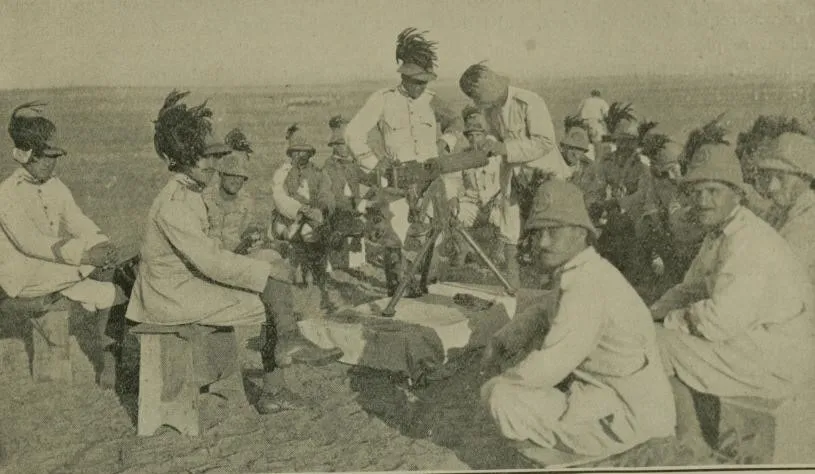
The Italian contingent, known as the Italian Expeditionary Corps in Palestine, arrived in May 1917. It consisted of a company of Bersaglieri and a section of Carabinieri (11 officers, 444 enlisted men, and 46 horses) commanded by Lieutenant-Colonel Francesco D’Agostino. On 13 June, our contingent set off for Rafas to guard a railway line. In September 1917, our contingent came under the command of General Watson and, together with Indian units, stormed Gaza. On 7 November 1917, General Allenby ordered the offensive on Gaza. A company from the Italian Detachment also took part in the Third Battle of Gaza, forming part of the XX Composite Force alongside the Imperial Service Cavalry, the 20th Indian Infantry Brigade (Patiala-Gwalior and Alwar) and six companies from the French contingent.
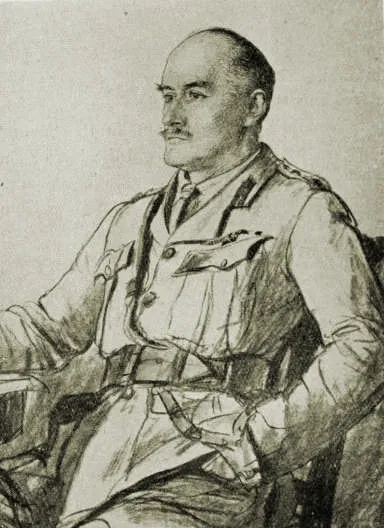
The Italians valiantly defended the Khan Yunis salient. The Turkish-German forces were routed and retreated in haste, leaving the Allies a clear path to Jerusalem. On 6 December, a detachment comprising twenty-five Bersaglieri, twenty-five Carabinieri and their respective officers set off for the Holy City, where Allenby, out of respect for the place, dismounted from his horse and entered on foot on the morning of 11 December, flanked by Commander D’Agostino and his French counterpart, De Piépape. In the Holy City, the Royal Carabinieri were deployed on guard duty and military police duties. On 9 December 1917, Allenby, through brilliant manoeuvres, forced the Turkish-German forces to evacuate Jerusalem after seven centuries of Turkish control.
General Allenby, at the foot of the Steps of David, flanked by our Colonel D’Agostino and the French Colonel Piépape, read out the proclamation of liberation. The war of attrition continued until Colonel D’Agostino was replaced by Colonel Gustavo Pesenti on 22 July 1918.
On 19 September 1918, Allenby entered Damascus, then Beirut, and on 26 September, Aleppo, where our tricolour flew from the minarets alongside the British and French flags. On 31 October, Turkey surrendered, and Italy decided not to send a further 6,000 men. The strength of the Italian contingent fluctuated between 2,000 and 3,000 soldiers, and its base was at Port Said. Allenby had words of praise for our soldiers and officers, noting that, although small in they fought valiantly.