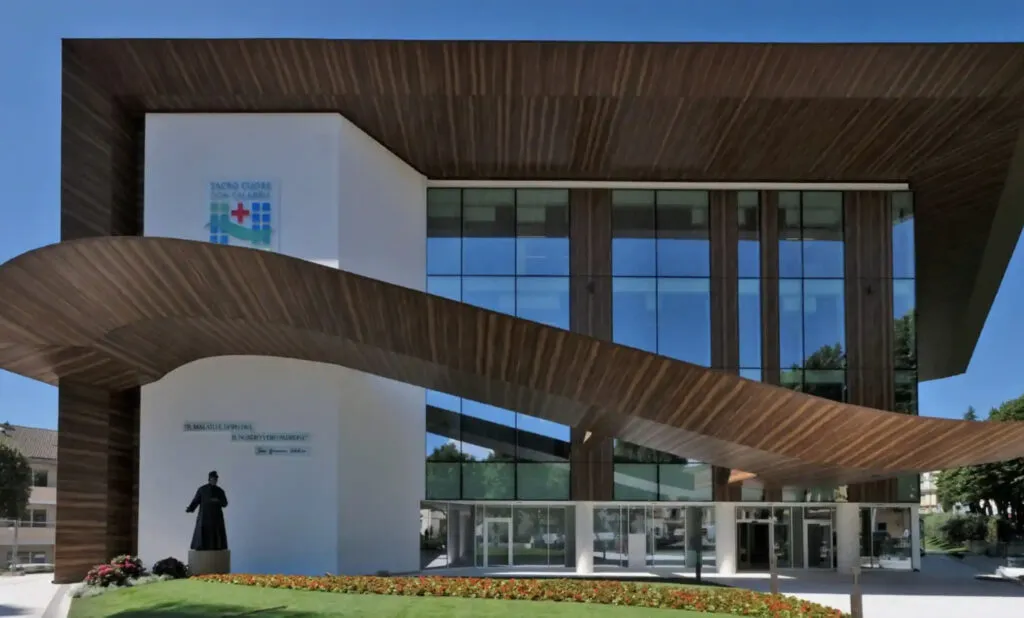
The IRCCS Sacro Cuore Don Calabria Hospital in Negrar has introduced an innovative technology for the rehabilitation of upper limbs in patients with tetraplegia, becoming one of only three centres in Italy equipped with a transcutaneous spinal neuromodulation device — a non-invasive system designed to enhance motor recovery.
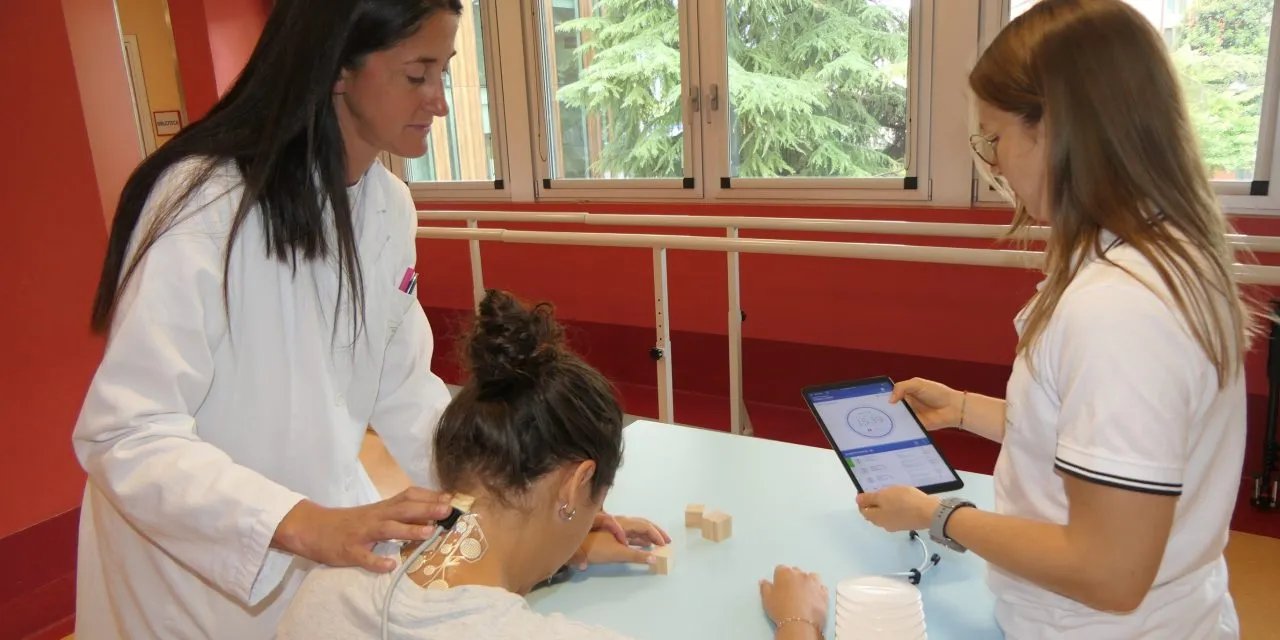
The new technology, which has been in use for several weeks within the hospital’s Rehabilitation Department, led by Dr Elena Rossato, consists of a patch containing 16 electrodes placed on the cervical region of the spine. Connected to a portable generator, the device delivers electrical impulses to the spinal cord’s neural circuits. Its aim is to enhance the effectiveness of conventional physiotherapy, robotic rehabilitation and occupational therapy, helping patients regain functional use of their arms and hands.
The technique is entirely non-invasive, requires no surgery and carries no significant risks or complications for patients, unlike implantable neuromodulation devices already used in other areas of rehabilitation medicine.
At present, the system is being used on patients with incomplete cervical spinal cord injuries, who experience tetraparesis but retain the potential for motor recovery in their arms and hands. According to Dr Rossato, however, the technology could have far-reaching applications.
“Because it stimulates the entire spinal cord, we cannot rule out the possibility that it may also produce benefits for the lower limbs, as well as for bladder and bowel control. In addition, research is paving the way for extending this technology to other central nervous system conditions, such as stroke,” the rehabilitation specialist said.
The electrical impulses generated by the device help improve communication between the brain and the spinal cord, increasing the ability of neural circuits to respond to motor signals. Scientific studies suggest that repeated stimulation may also promote neuroplasticity — the nervous system’s ability to reorganise itself following injury.
Dr Rossato emphasises that neuromodulation does not replace physiotherapy but rather strengthens its effects.
“It is a form of enhancement of the rehabilitation process. The patient’s active involvement remains essential, but stimulation allows exercises to be carried out at a time when the neural circuits are particularly receptive,” she explained.
The first patients treated at Negrar have already shown encouraging results. They have reported reduced pain, lower levels of spasticity, smoother and faster movements, and improvements in hand grip quality — one of the most complex functions to recover after spinal cord injury.
To scientifically assess the benefits of the technology, a national multicentre study will soon be launched, involving the IRCCS centre in Negrar and several leading Italian rehabilitation facilities. The research will focus in particular on shoulder recovery, one of the first motor functions to improve in patients with incomplete spinal cord injuries.
The Rehabilitation Department at the IRCCS Sacro Cuore Don Calabria Hospital in Negrar, which also includes the Spinal Unit directed by Dr Giuseppe Armani, is recognised as one of Italy’s leading centres for neurological rehabilitation. Each year it treats around 40 patients with spinal cord injuries, many of whom are referred from the University Hospital of Verona as part of an ongoing collaboration established in 2009.